

GCC–U.S. Think Tank Strategic Dialogue Launched
Derasat and American Foreign Policy Council initiative brings together Gulf and U.S. experts to shape future partnership strategies
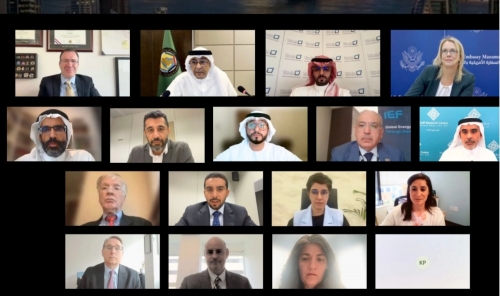
The Bahrain Center for Strategic, International and Energy Studies (Derasat) and the American Foreign Policy Council (AFPC), in coordination with the Gulf Cooperation Council (GCC) General Secretariat, have officially launched the GCC–U.S. Think Tank Strategic Dialogue.
The inaugural dialogue was held in the presence and participation of GCC Secretary General H.E. Jasem Mohamed Al Budaiwi, bringing together senior officials, experts and representatives from leading think tanks across GCC member states and the United States.
The closed webinar focused on the future direction of the GCC–U.S. partnership amid changing regional security and economic conditions, with discussions covering regional stability, energy security, economic integration and emerging geopolitical challenges.
GCC–U.S. partnership remains key pillar of stability
In his opening remarks, GCC Secretary General Jasem Mohamed Al Budaiwi emphasized that the GCC–U.S. partnership continues to serve as a fundamental pillar supporting regional stability.
He highlighted the importance of shifting from a crisis-management approach toward developing a comprehensive regional security framework capable of addressing evolving challenges.
Al Budaiwi noted that cooperation between the Gulf states and the United States extends beyond traditional security ties, describing the region as an expanding economic hub influencing global investment, energy markets and technology development.
He stressed the need for a shared strategic vision to address future challenges and strengthen cooperation in the post-conflict environment.
Dialogue aims to shape future policies
Derasat CEO Abdulla Mohamed Alahmed said the strategic dialogue represents an opportunity not only to analyze current developments but also to anticipate future trends and develop practical recommendations to strengthen GCC–U.S. cooperation.
He said the initiative seeks to identify strategic lessons and support policies that contribute to regional security and stability.
Alahmed added that Derasat aims to expand the dialogue in the future to cover additional areas of mutual interest, with upcoming in-person meetings planned in Washington D.C. and Manama later this year.
The meetings will coincide with Bahrain’s presidency of the 46th session of the GCC.
Security, energy and economy seen as interconnected priorities
Participants highlighted that security, energy and economic issues are increasingly interconnected and must be addressed through coordinated strategies to ensure the stability of the Arabian Gulf region.
The discussions also focused on recent regional developments, including attacks targeting GCC member states, critical infrastructure, maritime routes and freedom of navigation.
Participants emphasized the importance of protecting national sovereignty, respecting international law and strengthening strategic coordination among regional and international partners.
Key topics discussed during the dialogue included the future of the GCC–U.S. security partnership, energy resilience, economic diversification, maritime security, protection of critical infrastructure, logistics development and strengthening collective capabilities.
Related Posts