

Turkey and Armenia to start trade: foreign ministry spokesman
Email: online@newsofbahrain.com
ANKARA: Turkey and Armenia have officially resumed direct trade relations after a 33-year freeze, marking a major milestone in the ongoing normalization process between the two neighboring nations.
The Turkish Foreign Ministry announced on Wednesday that all bureaucratic and technical preparations for the initiation of direct trade were finalized as of May 11.
Under the new regulations, goods can now be formally designated as direct exports with ‘Turkey’ or ‘Armenia’ listed as the country of origin and final destination.
Previously, commercial exchange was restricted by customs barriers that forced trade to be conducted indirectly through third countries, primarily Georgia often involving extra taxes and logistical complications.
While trade will still transit through a third country until land borders are fully functional, the removal of these bureaucratic hurdles represents a significant thawing of economic ties.
The decision has been welcomed by officials in Yerevan as an ‘important step’ toward establishing full-fledged and stable relations. For Armenia, an economy heavily dependent on regional connectivity and energy imports, direct access to Turkish markets offers substantial economic potential. For Turkey, the move signals a strategic intent to expand its regional influence and foster economic integration in the South Caucasus.
The land border between the two countries has been closed since 1993, when Turkey shuttered it in support of Azerbaijan during the Nagorno-Karabakh conflict.
While the resumption of direct trade is a pivotal confidence-building measure, the full opening of the 311-kilometer land border remains subject to ongoing technical work. Ankara has previously indicated that a permanent reopening of the frontier is closely linked to the signing of a final peace treaty between Armenia and Azerbaijan.
Despite this progress, the two nations remain divided by deep-seated historical grievances, particularly regarding the events of 1915–1917. However, the current rapprochement, which has been gainining momentum since 2022 through special envoys, suggests a pragmatic shift toward regional stability. R
ecent agreements, such as the memorandum to restore the historic Ani Bridge on the shared border, further highlight the symbolic and practical steps being taken to bridge the decades-long divide
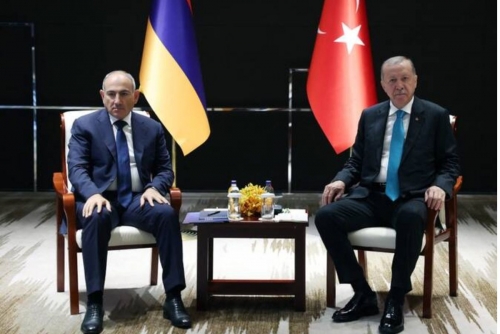
Photo credits: Turkish President Recep Tayyip Erdogan with Armenian Prime Minister Nikol Pashinyan. (AFP)
Related Posts