

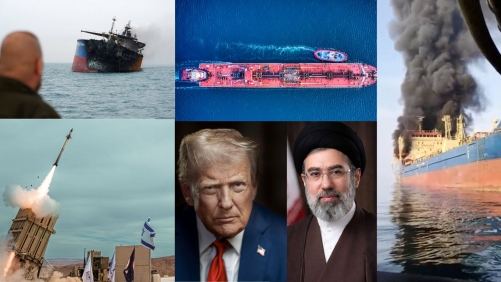
Iran Vows to Keep Strait of Hormuz Closed Following Supreme Leader’s Directive
Iran’s navy commander Alireza Tangsiri announced that Iran will continue to keep the Strait of Hormuz closed, saying the move comes in response to instructions from the country’s Supreme Leader.
Posting on X, Tangsiri said Iran would deliver “the strongest blows to the aggressor enemy” by maintaining its strategy of keeping the critical waterway shut.
The announcement follows remarks by Iran’s Supreme Leader Ali Khamenei, who declared in his first address since assuming his latest mandate that the Strait of Hormuz should remain closed. He also stressed that Iran would seek revenge for what he described as “crimes committed by the enemy.”
The Strait of Hormuz is considered one of the world’s most important maritime chokepoints, carrying a significant share of global oil and energy supplies.
Meanwhile, U.S. President Donald Trump responded by emphasizing that the United States remains the world’s largest oil producer by a wide margin. Trump noted that the country benefits financially when oil prices rise.
However, he said his primary concern as president is preventing what he described as an “evil empire,” referring to Iran, from acquiring nuclear weapons and destabilizing the Middle East and the wider world. Trump said the United States would not allow that to happen.
The escalating rhetoric comes as global oil prices climbed back above $100 per barrel, after briefly falling days earlier when Trump suggested that the conflict could end soon.
Iran has repeatedly warned that it will not allow oil shipments to pass through the Strait of Hormuz — a vital global energy corridor — unless the United States and Israel halt attacks against it. Tehran has also stated that it will not enter negotiations with Washington under current conditions.
Global Economic Concerns
Global trade experts warn that a prolonged closure of the Strait of Hormuz could disrupt far more than just energy markets. The impact could extend to agricultural supplies, metals, and industrial goods, potentially triggering broader disruptions to global trade.
Analysts say the waterway may have entered an era of “permanent risk,” regardless of how the current conflict unfolds. The situation is widely seen as a major test for global energy security.
The crisis is also renewing calls for countries to diversify supply routes, increase strategic reserves, and develop alternative infrastructure to reduce reliance on what many consider the world’s most sensitive maritime bottleneck.
Market indicators suggest that even after the conflict ends, the Strait of Hormuz could remain one of the largest sources of uncertainty for the global economy, keeping markets on edge despite the relatively low probability of a prolonged closure.
Related Posts