

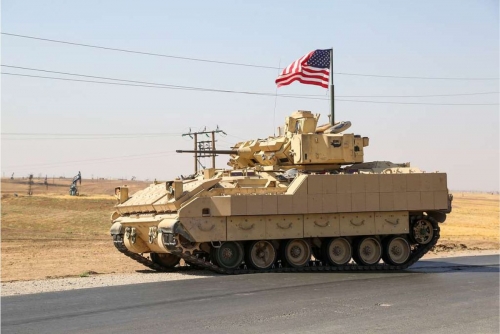
Withdrawal From Northeastern Syria Base Signals Broader U.S. Exit
Email: online@newsofbahrain.com
The United States military has started pulling forces and equipment out of its largest base in northeastern Syria, marking a significant shift in Washington’s decade-long involvement in the conflict-torn country. U.S. troops and armoured vehicles were seen departing the Qasrak base in Hasakah province, with many assets being moved toward northern Iraq, according to local and security sources.
The drawdown at Qasrak a hub of U.S. operations alongside the Kurdish-led Syrian Democratic Forces (SDF) against Islamic State (IS) follows earlier withdrawals from other strategic outposts, including al-Tanf near the Jordanian border and al-Shaddadi in the northeast this month. Those pullbacks reflect a broader reconfiguration of U.S. forces in Syria.
Reports from AFP indicate that the current phase could take several weeks to complete, with some Syrian government and Kurdish officials suggesting U.S. forces may end their military presence at bases in Syria within about a month. However, U.S. Central Command has not commented publicly on the timeline.
While many troops and equipment have left Qasrak, a smaller remaining contingent is reportedly dismantling communications and defence infrastructure before leaving. Convoys of trucks and helicopters were observed moving out, highlighting the logistical scale of the withdrawal.
The pullback comes amid a changing security landscape in northeastern Syria, where Damascus-aligned forces have expanded control over territory formerly held by Kurdish factions that Washington once backed. Syrian and Kurdish sources describe the evolving balance of power as a factor in the U.S. decision to reduce its footprint.
Despite the withdrawals, U.S. officials say forces remain vigilant against IS threats, which persist through sleeper cells even after losing territorial control. The shifting U.S. posture also involves relocating troops to Iraq’s semi-autonomous Kurdish region, where they can continue training and support missions.
Related Posts