

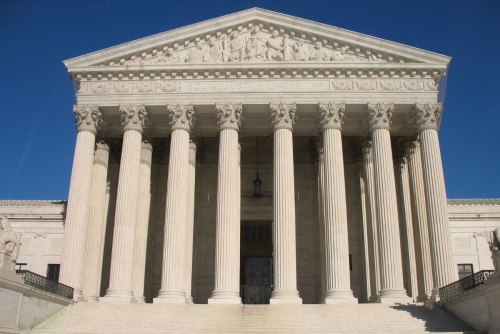
U.S. Supreme Court Strikes Down Trump’s Global Tariffs
Email: online@newsofbahrain.com
Washington: In a landmark decision the U.S. Supreme Court ruled 6–3 that President Donald Trump’s sweeping global import tariffs were outside his legal authority, finding that the law he invoked, the International Emergency Economic Powers Act (IEEPA) does not give the president unilateral power to impose broad tariffs without explicit congressional approval.
Chief Justice John Roberts wrote in the majority opinion that tariff-setting powers reside with Congress, underscoring the constitutional separation of powers and limiting executive overreach on trade policy. The ruling potentially invalidates billions of dollars in duties that had been collected under Trump’s emergency-era tariff campaign, touching markets and negotiators across the globe.
Although the decision was framed as a win for free trade and constitutional balance, Trump immediately rejected it, calling the verdict “deeply disappointing” and asserting that the court’s interpretation constrains the executive branch unduly.
Reacting swiftly, the White House announced that President Trump has signed a new executive order imposing a 10 % global tariff under a different statute Section 122 of the Trade Act of 1974 which allows temporary import duties for up to 150 days while broader investigations are conducted.
Under this approach, countries that previously negotiated tariff terms with the U.S. including trade partners such as the United Kingdom, European Union nations, India, and others will now face the flat 10 % import tax instead of their agreed-upon rates.
The ruling and Trump’s response have already sparked international reactions. European industry groups are seeking clarity on how the verdict affects long-negotiated trade accords, while Brazil’s vice president described the decision as restoring competitiveness in key markets.
The legal and economic fallout from this decision is likely to unfold for years, as affected companies consider refund claims and policymakers debate the future tools for U.S. trade enforcement.
Related Posts