

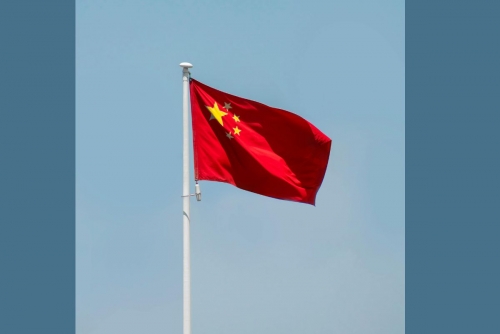
U.S. Details New Evidence Alleging China’s 2020 Nuclear Test
Email: online@newsofbahrain.com
Washington: A top U.S. official on Tuesday presented new technical observations supporting the claim that China may have conducted an underground nuclear detonation near its Lop Nor test site in June 2020. The remarks were delivered during an event at the Hudson Institute think tank and drew strong denials from Beijing.
Assistant Secretary of State Christopher Yeaw outlined that seismic monitoring data collected in Kazakhstan recorded a magnitude 2.75 event on 22 June 2020. He argued the patterns seen in the data were inconsistent with mining operations or natural earthquakes, suggesting a controlled explosion consistent with a nuclear test.
The Comprehensive Nuclear‑Test‑Ban Treaty Organization which runs a global seismic detection network acknowledged the same signals but said they were too weak to conclusively identify a nuclear explosion. Its executive secretary noted that the magnitude was significantly below levels normally associated with confirmed nuclear tests.
China has forcefully dismissed Washington’s claims of a covert nuclear test, with Liu Pengyu, spokesperson for the Embassy of the People’s Republic of China in Washington, D.C., rejecting the allegation as baseless.
“This is political manipulation aimed at pursuing nuclear hegemony and evading its own nuclear disarmament responsibilities,” Liu said, adding that the accusation that China carried out a nuclear test was “entirely unfounded”.
Beijing urged the United States to uphold its commitments on nuclear restraint and respect international arms-control norms, warning that such claims risk further damaging strategic trust between Washington and China.
The dispute comes as global arms control frameworks face strain, with the landmark Comprehensive Nuclear‑Test‑Ban Treaty still not in force and major powers debating future limits on nuclear weapon development. Both the U.S. and China have signed but not ratified the treaty, leaving room for diplomatic friction over compliance and verification.
U.S. officials have also highlighted concerns about China’s rapidly growing arsenal, which Pentagon estimates suggest could exceed 1,000 warheads by 2030 if current trends continue. The controversy over the 2020 event adds to broader tensions over arms control and strategic balance between the world’s nuclear powers.
Related Posts