

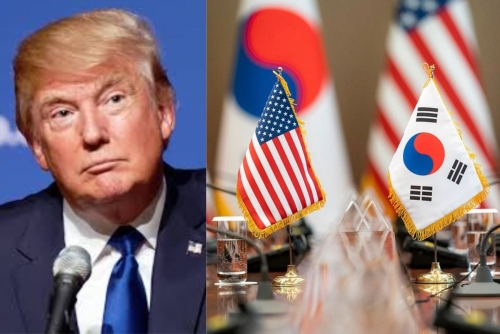
Trump Announces 25% Tariffs on South Korean Imports
Email: online@newsofbahrain.com
Seoul: U.S. President Donald Trump has moved to increase tariffs on imports from South Korea to 25 per cent, blaming Seoul’s legislature for delaying approval of a bilateral trade framework agreed in 2025. The announcement has triggered market reactions and heightened diplomatic friction between Washington and one of its key economic partners.
Trump posted on his social media platform that the tariff hike which would apply to automobiles, lumber, pharmaceuticals and other goods is a response to what he described as South Korea’s failure to follow through on commitments linked to a trade and investment deal struck with the United States last year. That agreement had set imported tariff levels at 15 per cent for certain goods, down from a previous 25 per cent rate.
“South Korea’s Legislature is not living up to its Deal with the United States,” Trump wrote, questioning why the trade pact had not yet been ratified. Implementation of the tariff change, including its effective date, has not yet been made clear by the White House.
In Seoul, officials said they were not formally notified of the U.S. action ahead of the announcement, prompting emergency meetings among senior policymakers to coordinate a response and prepare talks with American counterparts. South Korea’s Trade Minister Kim Jung-kwan is expected to travel to the U.S. shortly to discuss the issue with U.S. Commerce Secretary Howard Lutnick.
Market reaction has been mixed. Shares of major South Korean automakers initially declined sharply after Trump’s announcement with Hyundai Motor and Kia Corp seeing early losses but later staged modest recoveries. The broader stock market, including the Kospi index, showed resilience in the face of the tariff news, reflecting strong performance in other sectors such as semiconductors and technology. The South Korean won weakened slightly against the dollar.
The tariff escalation could possibly disrupt global supply chains, particularly in the automotive and pharmaceutical sectors, and may complicate an already delicate economic relationship between the U.S. and South Korea. The situation adds to broader uncertainty in international trade policies, coming amid other tariff threats by the Trump administration toward allies and trading partners.
The trade pact referenced by Trump included commitments by Seoul to make major investments in the U.S. economy alongside tariff cuts. However, ratification in the South Korean National Assembly has been delayed, leaving the agreement in a legal limbo and fueling Washington’s decision to revert to higher tariff rates.
South Korea’s government has indicated it plans to press ahead with legislative discussions when the National Assembly reconvenes in early February 2026, and officials are seeking to clarify the next steps with U.S. counterparts to prevent further escalation.
Related Posts