

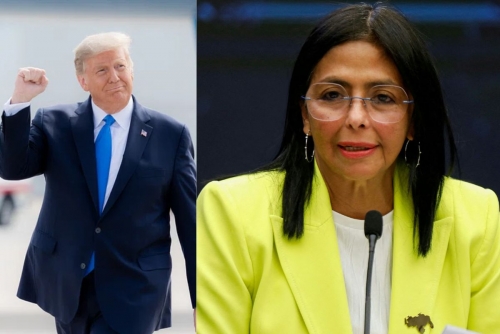
Rodríguez Asserts Sovereignty, Says ‘Enough orders from Washington’.
Email: online@newsofbahrain.com
Caracas: Venezuela’s interim president, Delcy Rodríguez, delivered a forceful statement rejecting what she described as excessive pressure and “orders from Washington” in the wake of heightened U.S. involvement following the capture of former President Nicolás Maduro earlier this month. Rodríguez’s remarks signal an intensification of tensions between Caracas and Washington as the South American nation struggles with political transition and international scrutiny.
Addressing a crowd of oil workers in the eastern state of Anzoátegui, Rodríguez said her government has “had enough” of foreign direction in Venezuelan politics. “Let Venezuelan politics resolve our differences and internal conflicts… enough of foreign powers,” she said, framing the dispute as one of national sovereignty and internal agency.
Her comments come amid a contentious political landscape in Venezuela, where the United States has taken a more assertive role following its capture of Maduro and his wife in early January. Rodríguez’s rejection of U.S. “orders” is the strongest public pushback yet from the interim leadership, which has struggled to balance domestic stability with foreign expectations and pressure.
The interim president has also stressed the importance of addressing Venezuela’s internal disputes through domestic dialogue and consensus, rather than through external intervention, a stance she reiterated while calling for unity and peace. Analysts say this shift in rhetoric reflects growing unease among Venezuelan officials about external influences shaping the country’s future.
Rodríguez’s speech came as Venezuela continues a controversial campaign of prisoner releases, with local NGOs reporting that at least 104 political prisoners were freed on January 25, a move that the interim government says responds to international calls for humanitarian progress.
Despite these releases, opposition figures and rights groups contend that the pace remains slow and that many detainees are still behind bars, with families of prisoners maintaining vigils outside detention centres in Caracas.
In recent weeks, U.S. officials have defended their actions as efforts to curb corruption, restore democratic norms and counter criminal networks tied to the previous Maduro administration. President Donald Trump’s administration has also hinted at broader involvement in Venezuela’s transition, including discussions about possible roles for opposition figures in future governance, even as Rodríguez publicly pushes back.
As the standoff continues, Rodríguez has appealed for Venezuelans to lead negotiations and political solutions at home, distancing her government from perceptions of foreign compliance. The dispute underscores the broader geopolitical friction surrounding Venezuela’s future governance, national resources and regional stability.
Related Posts