

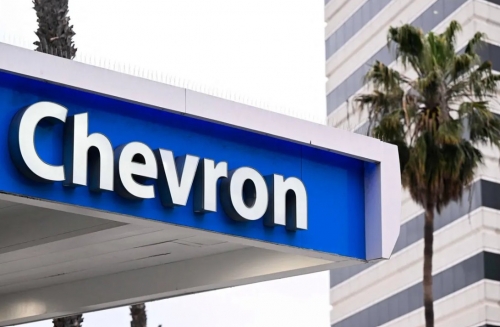
Chevron Remains Sole Foreign Operator in Venezuela’s Oil Fields
email: online@newsofbahrain.com
New York: US oil major Chevron is navigating growing political and economic pressure as tensions between Washington and Caracas intensify, threatening its unique status as the only foreign company permitted to operate in Venezuela’s vast oil sector.
Chevron’s position has come under renewed scrutiny following Washington’s decision last week to impose a total blockade on oil tankers, adding to already sweeping US sanctions on Venezuela. The move has placed the company’s continued presence in the country, home to the world’s largest proven oil reserves, firmly in the spotlight.
Chevron’s roots in Venezuela date back more than a century. Its predecessor, the Venezuelan Gulf Oil Company, was founded in April 1923 and began drilling operations a year later near Lake Maracaibo before expanding to other regions, including the Orinoco Belt, where most reserves are now concentrated. Following Gulf Oil’s merger with Standard Oil of California in 1984, Chevron emerged as the operator it is today.
The company currently extracts oil from four onshore fields and produces offshore gas from another, operating across nearly 30,000 hectares in partnership with Venezuela’s state-owned oil company PDVSA. The joint ventures employ around 3,000 people.
According to the International Energy Agency, Venezuela held an estimated 303 billion barrels of oil in 2023 which is roughly 17 percent of global reserves. However, production has fallen sharply from a peak of more than three million barrels per day to about 800,000-900,000 barrels per day.
Chevron accounts for roughly 10% of that output, producing between 150,000 and 200,000 barrels per day, all of which is exported to the United States under a special exemption. The broader US embargo on Venezuelan oil, imposed in 2019, was partially eased in 2023 before President Donald Trump revoked most licenses in early 2025, leaving Chevron as the sole exception.
Industry analysts say recent US decisions have not yet disrupted Chevron’s operations. The company told AFP it believes its presence “continues to be a stabilising force for the local economy, the region and US energy security,” adding that it operates fully within US sanctions frameworks.
Chevron’s continued activity contrasts sharply with the absence of other foreign oil firms, deterred by US sanctions and Venezuelan laws requiring majority state ownership through PDVSA, the terms Chevron accepted.
Analysts note that Venezuelan crude is heavy, high-sulphur oil that is difficult to transport and refine. While US refineries along the Gulf Coast were designed decades ago to process such oil, experts say the United States does not rely on it for energy security.
Instead, analysts suggest Chevron’s presence serves a strategic purpose. “The US does not need this oil,” said Stephen Schork of the Schork Group, arguing that Washington’s interest lies in preventing rivals such as China and Russia from expanding their influence in Venezuela’s energy sector.
Meanwhile, Venezuela’s oil exports outside Chevron’s operations are largely sold at steep discounts on the black market, mainly to Asia. Experts warn that the new US blockade could slash these illicit exports by as much as 50%, further straining Caracas’s finances as Chevron balances its fragile foothold amid escalating geopolitical tensions.
Related Posts