

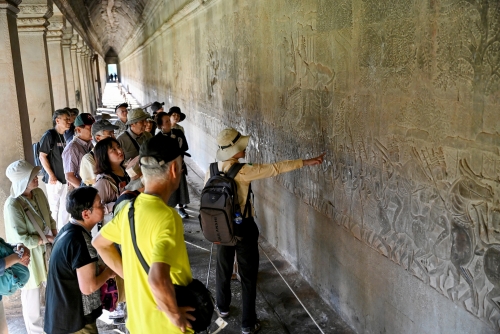
Border Clashes With Thailand Leave Cambodia’s Angkor Temples Struggling for Tourists
Siem Reap: Cambodia’s famed Angkor temple complex is facing a sharp drop in visitors during what should be peak tourist season, as deadly border clashes with neighbouring Thailand deter travellers and hit local livelihoods.
Tour guide Bun Ratana said work has dried up since fighting broke out more than two weeks ago near the Thai border, just a two-hour drive from Siem Reap, where the UNESCO-listed Angkor ruins are located. The renewed military confrontations have killed dozens and prompted widespread travel cancellations.
“Some tourists are scared, but here in Siem Reap it is safe,” Bun Ratana said, adding that more than 10 of his tours were cancelled in December alone. He said his income has plunged by around 80 percent to about $150 compared with the same period last year.
The conflict, rooted in a long-running border dispute dating back to the colonial era, has also led to the closure of overland crossings between the two countries. Tour operators, vendors and drivers in both Siem Reap and Bangkok say the closures, combined with renewed clashes in July and this month, have severely affected business.
Tourism accounts for around 10 percent of Cambodia’s GDP, with the country welcoming a record 6.7 million visitors last year. However, ticket sales to Angkor fell by at least 17 percent year-on-year between June and November, according to Angkor Enterprise, with the decline accelerating after five days of intense fighting in July.
Local vendors say the usually busy December period has been unusually quiet. “I think they may be scared… I am scared too,” said T-shirt seller Run Kea, who noted she is earning only a fraction of her usual income.
The impact has also been felt across the border in Thailand, where minivans that once ferried tourists to Angkor Wat now sit idle following the closure of border crossings to tourists. Thai tour operators say uncertainty has disrupted travel plans and bookings.
Despite the downturn, some visitors remain undeterred. Foreign tourists visiting Angkor told AFP they felt safe in Siem Reap and were happy they made the trip. Hospitality experts added that the disruption is largely concentrated in regional overland travel rather than global demand for Cambodia.
However, analysts say fears have been compounded by negative media coverage and concerns over cyber-scam networks operating in the region, which have further damaged Cambodia’s tourism image.
Siem Reap provincial tourism director Thim Sereyvudh acknowledged the challenges but expressed confidence that visitors would return once the fighting ends. “The sooner the war ends,” he said, “the sooner they will come back.”
Related Posts