

Dollar rises on EU-US trade deal but European stocks turn sour
AFP | London
Email : editor@newsofbahrain.com
The dollar jumped Monday on the back of the US-EU trade deal, but the main European stock markets fell, reflecting unease at terms viewed as lopsided.
Frankfurt closed sharply down, as shares in German carmakers plunged. Paris dipped, while London -- outside the EU -- also receded.
In New York, the S&P 500 and Nasdaq rose, while the Dow largely traded flat.
While Brussels defended the deal it struck on the weekend as “better than a trade war with the United States”, several EU countries expressed unhappiness.
European capitals saw the agreement’s 15% tariffs on most EU exports to the United States -- but none on US ones to the EU -- as skewed.
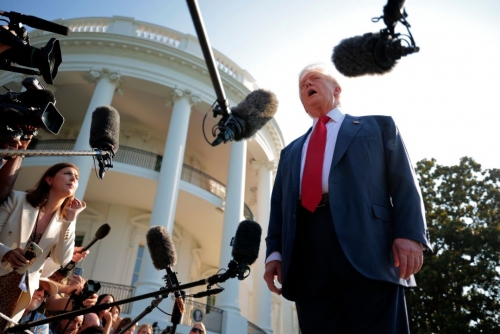
As part of the deal, President Donald Trump said the bloc had agreed to purchase “$750 billion worth of energy” from the United States, and make $600 billion in additional investments.
“While the deal has avoided a much worse outcome for now, it remains to be seen whether it will last,” cautioned Jack Allen-Reynolds, a eurozone economist at Capital Economics.
With average US tariffs on EU imports now around 17%, “we think this will reduce EU GDP by about 0.2%,” he said.
He predicted that “uncertainty is likely to remain high” because Trump “could still change his mind even after the deal has been finalised and signed”.
Oil prices rose strongly.
That was partly on relief from the deal -- but also because Trump shortened a deadline for Russia to end its war in Ukraine to August 7 or 9, after which he vowed to sanction countries buying its crude.
Monday also saw the start of a fresh round of trade negotiations between China and the United States ahead of August 12, when a 90-day truce between the economic superpowers is scheduled to end.
Shares in European companies tracked the unease at the EU-US deal.
Volkswagen, BMW and Porsche all shed more than three% as the implications of high tariffs on their exports to the United States sank in.
In Paris, shares in Pernod Ricard, which exports wine and spirits to the United States, fell more than 3%. Shares in Dutch brewer Heineken -- the world’s second-biggest beer-maker -- lost more than 8% in Amsterdam after it announced a drop in sales.
Traders were prepared for a busy week in the United States, with a slew of corporate earnings reports -- including from Apple, Microsoft, Meta and Amazon -- and macro data readings coming their way giving indications about US jobs and growth.
The Federal Reserve is expected to keep interest rates unchanged at its meeting this week, with investors focused on its outlook for the rest of the year given Trump’s tariffs and recent trade deals.
What did EU, US agree?
Both sides confirmed there will be a 15-percent acrossthe-board rate on a majority of EU goods -- the same level secured by Japan this month.
Most significantly, that means a tariff reduction for the EU auto sector from the 27.5 percent carmakers had been forced to pay.
While 15 percent is much higher than pre-existing US tariffs on European goods -- averaging 4.8 percent -- it mirrors the status quo, with companies currently facing an additional flat rate of 10 percent imposed by Trump since April.
The EU also agreed its companies would buy $750 billion of liquefied natural gas, oil and nuclear fuels from the United States -- split equally over three years -- to replace Russian energy sources.
And it said it would pour $600 billion in additional investments in the United States -- based on the "investment intentions of private companies" in the bloc, a senior EU official explained.
A White House factsheet said EU countries -- which recently pledged to ramp up defence spending within NATO -- "agreed to purchase significant amounts of US military equipment."
But the EU official said arms procurement was not "agreed or discussed" -- suggesting Washington was alluding to purchases expected independently from the trade agreement.
Will any goods be tarifffree?
The White House said the deal involved “the elimination of all EU tariffs on US industrial goods”.
Brussels meanwhile said the leaders had agreed bilateral tariff exemptions for key goods -- with the exact list still to be finalised.
The EU official said the bloc was ready to lower levies to zero percent on US cars, machinery products, some chemicals and items linked to fertilisers -- which could be an alternative to Russian sources.
In exchange, the official said, Washington was expected to eliminate levies on European aircraft, certain medical devices and some pharmaceuticals for which the United States depends on EU imports.
Discussions are ongoing about European alcohol exports becoming tariff-free -- including wine.
The EU official also said the bloc would be willing to do away with levies on certain US products taxed at very low rates -- in the order of one to four percent -- including nuts, lobster, fish, dairy and pet food.
Are there sector-specific terms?
Semiconductors and pharmaceuticals are currently the target of US trade probes that could see Trump impose massive levies.
Under the deal struck Sunday, the EU says the United States has agreed that whatever the outcome of those investigations, those sectors will not be taxed at more than 15 percent.
The White House said pharmaceuticals and semiconductors would indeed be taxed at that rate.
Protecting pharmaceuticals -- a major EU export to the United States and a critical sector for Ireland -- was a priority in the bloc’s negotiations.
Steel was another key area -- which along with copper and aluminium is currently facing a 50-percent US tariff.
The White House said those sectoral tariffs “will remain unchanged” but that it would “discuss securing supply chains for these products” with the EU.
But the EU official said the understanding was a certain quota of steel -- based on historic levels -- would enter the United States before the 50-percent levy kicks in.
What happens next?
The deal needs to be approved by EU states, under a process to be determined by what legal form the final agreement takes, the EU official said. On the US side, the majority of the undertakings are expected to be carried out by executive order.
The EU had prepared a $109-billion retaliation package against US goods, which was due to take effect from August 7.
Brussels will suspend the measures once Trump publishes his executive order.
Related Posts