

Customs Fines Added for Seal Removal
Updated GCC customs law brings fines and new exemptions framework
TDT | Manama
Email: mail@newsofbahrain.com
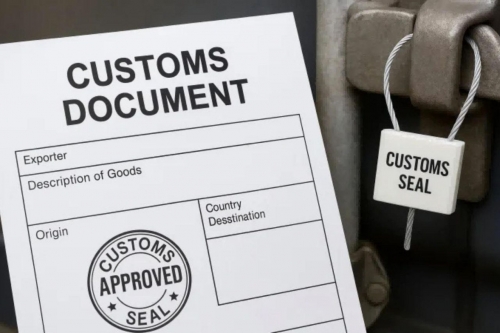
New rules on customs clearance, duty refunds and traveller exemptions have been issued in Bahrain. Fines also cover cutting lead seals, removing customs seals, locks or ties, and removing covers from goods.
The changes were issued by Interior Minister Shaikh Rashid bin Abdullah Al Khalifa under Decision No. 63 of 2026, amending the executive regulations of the GCC Unified Customs Law. They take effect the day after publication in the Official Gazette.
Customs may now accept electronic papers for clearance if the owner of the goods or an authorised representative sends them. The sender must be approved by Customs, and the papers may be checked, certified, electronically signed or matched against originals.
The decision also allows heavy machinery and equipment not available in local markets to enter temporarily for projects or for practical and scientific tests linked to them. The period is capped at three years, with room for extension by the director-general or his authorised representative.
Foreign goods re-exported outside the GCC may have customs duties refunded in full or in part. The goods must be from one consignment, worth at least BD2,000, unused locally, and in the same state in which they entered.
Re-export must take place within one year of the first duty payment. Refund claims must be filed within six months of re-export, and will cover only duties already paid.
Travellers will be allowed duty-free personal luggage and gifts worth up to BD300, provided the items are personal and not in commercial amounts. The traveller must not be a frequent customs user or a trader in the goods carried. The cigarette limit is 200.
Personal postal parcels and consignments will be exempt if they are non-commercial and worth no more than BD100. The exemption does not cover banned, counterfeit or fraudulent goods, restricted items without permits, tobacco and its products, or goods breaching approved standards or intellectual property rights.
Charity supplies may also be exempt from customs duties if the charity is registered and works in humanitarian, social, cultural, scientific, religious or other charitable fields without seeking profit. Associations with a political aim will not benefit.
Charities may not sell or use exempted goods for any purpose other than the one for which the exemption was granted unless Customs gives approval after inspection.
Relief goods are also covered, provided the relevant government body writes to Customs. The goods must fit relief work and match the actual need. They may not be sold after duty-free clearance without Customs approval.
The decision adds a customs breach for using exempted goods, or goods admitted under a lower tariff, for a purpose other than the one for which they were imported. Replacing, selling or disposing of such goods without Customs approval and without paying duties is also covered.
Customs breaches under the amended regulation carry fines from BD50 to BD1,000, or the same value in another GCC currency.
The decision also creates rules for temporary exports, covering heavy machinery, goods sent abroad to complete manufacturing, equipment sent for repair, goods for exhibitions and theatres, containers for filling, animals for grazing and commercial samples.
Temporary export is generally capped at 365 days, with some cases allowed extensions up to five years with Customs approval. Animals sent for grazing and other approved cases are capped at 180 days.
Temporary export ends when the goods return to GCC states, are turned into final exports, or when the approved period ends. Customs approval must be obtained before the goods are sent out.
Related Posts