Bahrain’s Global SDG Initiative Expands
In line with the Kingdom of Bahrain’s strategic vision that places youth at the heart of comprehensive development, the King Hamad Award for Youth Empowerment to Achieve the SDGs has emerged as one of the Kingdom’s most prominent global initiatives, reinforcing Bahrain’s leadership in systematically investing in young people and translating the leadership’s firm belief in their ability to drive sustainable positive change at national, regional and international levels.
The Award reflects the unwavering confidence of His Majesty King Hamad bin Isa Al Khalifa in youth as an active force in building a more peaceful, tolerant, prosperous and sustainable world. His Majesty’s patronage underscores the Award’s close alignment with the United Nations 2030 Agenda for Sustainable Development, positioning youth empowerment as a practical pathway to achieving its 17 Sustainable Development Goals (SDGs).
The directives of His Royal Highness Prince Salman bin Hamad Al Khalifa, Crown Prince and Prime Minister, further affirm the government’s institutional approach to integrating youth into public and development policies. The Award aligns with government priorities in strengthening human capital, fostering innovation and entrepreneurship, and enhancing Bahrain’s global role in mobilising youth potential.
His Highness Nasser bin Hamad Al Khalifa, Representative of His Majesty the King for Humanitarian Work and Youth Affairs, plays a pivotal role in advancing the Award’s trajectory and consolidating its status as an international platform that reflects Bahrain’s commitment to empowering youth and expanding opportunities for them, while reinforcing the Kingdom’s presence in global youth and UN forums.
The Award was officially established in 2017 as a pioneering Bahraini global initiative, launched from the podium of the UN Economic and Social Council Youth Forum in strategic partnership with the United Nations Development Programme. It became the first international award of its kind dedicated exclusively to youth empowerment to achieve the SDGs, linking recognition of youth achievements with support for enabling institutional environments that enhance their participation and impact.
Since its inception, the Award has carried a clear vision of engaging youth worldwide as agents of change within their communities. It recognises their tangible contributions to advancing the 2030 Agenda, with a focus on scalable initiatives that generate sustainable impact.
The King Hamad Award for Youth Empowerment to Achieve the SDGs comprises two main categories reflecting the complementary roles in development. The Youth Category honours initiatives and efforts led by young people that directly contribute to achieving the SDGs. The Youth Enablers Category recognises institutions and entities that create supportive environments for youth participation and strengthen their capacity to act and influence, thereby advancing the implementation of the 2030 Agenda on sustainable foundations.
Across five consecutive editions, the Award has demonstrated remarkable growth in both participation and geographic reach, reflecting its cumulative impact and institutional continuity. The first edition attracted 663 submissions from 87 countries, marking a promising global starting point.
Participation surged in the second edition to 3,557 submissions from 125 countries—more than five times the number recorded in the inaugural edition—highlighting growing international confidence in the Award. This momentum continued in the third edition, which received 4,064 submissions from 109 countries, followed by a significant qualitative expansion in the fourth edition with 7,012 submissions from 122 countries.
The fifth edition consolidated the Award’s global standing, recording approximately 8,205 submissions from over 100 countries. This reflects more than a twelvefold increase in global engagement compared to the first edition, underscoring the Award’s evolution from an emerging initiative into a well-established international platform.
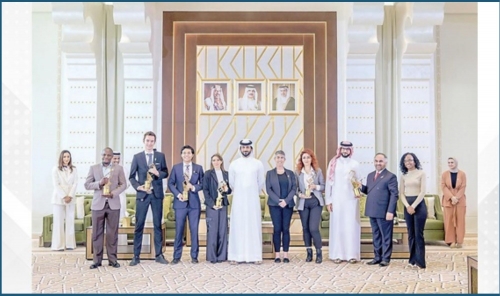
Beyond quantitative growth, the Award’s impact is reflected in its development outcomes. Over five editions, it has received a total of 23,501 submissions, demonstrating expanding international reach and growing trust in the platform as a global mechanism for youth empowerment. The Award has honoured 23 winners, including innovative young leaders and supportive institutions, presenting practical models for capacity-building and youth leadership development.
Its impact is evident in strengthened collaboration networks between youth, governments and international organisations, as well as in the transformation of many winning initiatives into sustainable projects influencing areas such as education, decent work, social innovation and environmental protection—fully aligned with the SDGs. The Award has also contributed to enriching public policy dialogue on youth and development.
The Award’s cumulative experience confirms that youth empowerment is no longer a theoretical slogan, but a measurable institutional practice. Its impact can be seen in enhancing youth leadership readiness, expanding their participation in decision-making, and strengthening international recognition of youth as key partners in development. It has further promoted a culture of multi-stakeholder partnerships by connecting youth with governments, international organisations and the private sector, ensuring sustainable outcomes and amplifying impact across borders.