

Health Minister Cites 100% Bahrainisation in Primary Care Amid Doctor Hiring Row
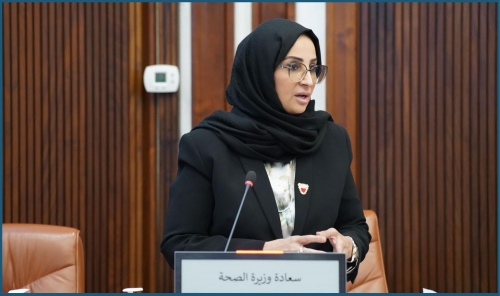
Health Minister Jaleela bint Al Sayed told MPs on Tuesday that the government is widening training and hiring routes for Bahraini doctors and nurses, citing full Bahrainisation across health centres and primary care and an estimated 88 per cent Bahraini share of doctors in government hospitals.
Speaking during the parliamentary sitting in reply to remarks by MP Abdulnabi Salman, Al Sayed said the Ministry of Health was putting its weight behind Bahraini staff to keep the health system sustainable. ‘We focus on investing in national cadres to ensure the sustainability of the health system through the hands of the people of this country,’ she said.
She said the current legislative term had delivered a change in frontline staffing. ‘The Bahrainisation of jobs in health centres and primary healthcare facilities has reached 100 per cent, and Bahraini doctors now account for around 88 per cent of doctors in government hospitals,’ she told the chamber.
Al Sayed said the work was being driven through co-operation between Parliament, the government and executive bodies, and that initiatives launched since the start of the term were aimed at widening job routes for Bahrainis.
She pointed to a sharp rise in training places, from 83 doctors targeted for residency training in 2023, supported by the Labour Fund (Tamkeen), to more than 700 training and job opportunities across 2024 and 2025 through residency and fellowship programmes. She said the push also covered nursing and specialised nursing, and has recently expanded to dentistry and supporting services.
The minister said the training schemes feed into planned replacement and localisation plans intended to create jobs and build reliance on Bahraini staff across clinical fields. She added that new health projects also open hiring paths through specialist centres, including the Multiple Sclerosis Centre and long-stay care centres.
She told MPs that foundation stones had been laid for facilities including the Qalali Centre and the Hussain Yateem Centre, and that other sites had been expanded, including the Kuwait Health Centre and the Bilad Al Qadeem Health Centre. She said these projects would draw on Bahraini staff.
Al Sayed said the targets also extend to the private sector through partnership with Tamkeen, with measures that support wages, push Bahrainisation and encourage private providers to take part in training. She said private-sector staff can also join training programmes in government hospitals, and that support is available for institutions moving to Bahrainise medical posts, especially doctors.
Parliament’s first deputy speaker, MP Abdulnabi Salman, said he did not see the steps as sufficient and argued that large numbers of graduates were still without jobs or placements. ‘There are more than 600 unemployed doctors still sitting at home,’ he said, adding that Salmaniya Medical Complex could not take in the numbers seeking training and that ‘more than 600 doctors’ needed placements, with private hospitals urged to play a bigger role.
Al Sayed said workforce planning also involves the Supreme Council of Health, working with the Ministry of Labour and the Civil Service Bureau, and noted that medical hiring since previous legislative terms had exceeded 600 posts for doctors and nurses across government hospitals and primary healthcare centres, alongside promotion tracks that take resident doctors through to consultant grade.
On training sites, she said the ministry has worked to bring the private sector in as a partner in supporting training programmes. She added that 2025 saw some graduates of overseas universities given access to internship placements in government hospitals, the Royal Medical Services and the private sector.
She said the ministry has supported hospitals seeking professional accreditation, citing King Hamad American Hospital, to secure Arab Board accreditation and operate as a training centre for four specialties, while expanding capacity for training inside Bahrain or through fellowships abroad.
Al Sayed said the ministry would continue working with Parliament on policy and workforce planning. ‘The Bahraini doctor is the true wealth, and the most successful guarantee for investment in the health sector,’ she said.
Related Posts