

MPs Push Leadership Training Track for Bahraini Youth
TDT | Manama
Email: mail@newsofbahrain.com
A plan to create a national leadership training track for young Bahrainis will be debated and voted on in Parliament on Tuesday, with MPs saying it would widen the pool of candidates ready for top posts.
The motion says stronger preparation is needed to build leadership capacity across both the public and private sectors, and to equip young people to carry out future state plans. The ministry supported the aim but said much of it is already being met through existing routes, pointing to ‘Lamea’ and other ministry-backed training schemes, while Tamkeen cited support that pays for professional certificates, overseas workplace training and the hiring of Bahrainis into executive jobs in the private sector.
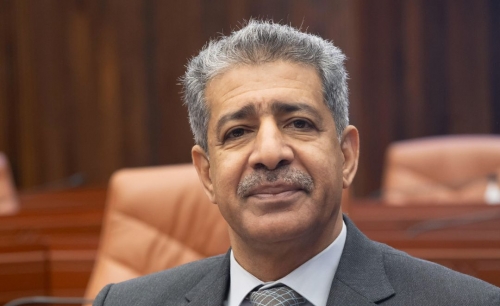
The proposal was submitted by MPs Dr Munir Seroor, Mohammed Jannahi and Mohammed Al Ahmed. Parliament’s Services Committee has recommended backing it, citing public interest.
In its reply, the ministry said it has been working with other bodies to expand leadership training and reach more people. It named the national ‘Lamea’ programme, which places participants from both sectors through demanding training and tests, with the aim of selecting those able to take on senior roles. It also pointed to ‘Youth City’, which offers leadership courses with accredited certificates, and the ‘Bader’ initiative, which brings in specialists, including in entrepreneurship and leadership, to run training courses for young people.
The Civil Service Bureau said training in government is already covered by law. It cited Article 18(2) of the Civil Service Law issued by Decree-Law No. 48 of 2010, as amended, which requires government bodies to enable staff to receive training in their field, with the bureau issuing guidance on how training is run under the executive rules.
It added that the executive rules issued by Prime Ministerial Decision No. 51 of 2012, as amended, set out how training needs are to be set, linked to career paths, each body’s aims, staff and organisational performance reviews, and the budget set aside. Government bodies, it said, work with the bureau on preparation and training plans for leadership roles.
The bureau also referred to Civil Service Instructions No. 5 of 2019 on training and study secondments, and said it later issued Decision No. 1 of 2022, in co-ordination with the Institute of Public Administration, setting out civil service instructions on the Institute’s leadership courses under the National Leadership Development Programme (NLDP). That programme, it said, is a single training policy for the public sector and is built around the idea that each employee is a leader at their own job level.
The bureau said the national programme runs through five linked tracks: Tasees (Foundation), Benaa (Building), Takween (Formation), Kawader (Cadres) and Qeyadat (Leaders). Entry depends on job level, meeting the intake rules and the funds made available.
Tamkeen said the goals set out in the motion are already being met through its support programmes under Law No. 57 of 2006, as amended, which includes raising the skills and work output of Bahrainis and helping private firms grow. It pointed to support for internationally recognised professional certificates, funded workplace training with global firms and specialist training in areas such as cyber security, data analysis, UX/UI and software engineering. It also cited support that covers staff training costs for firms, and wage support aimed at encouraging employers to hire Bahrainis into executive posts.
The Institute of Public Administration said it has offered leadership courses since 2009 to build human capital and prepare leaders and young people in both sectors. It said the National Programme for Developing Government Leadership began in 2009 and was later approved by the Civil Service Bureau in 2017 as a programme covering public-sector staff across job levels.
The Institute said its 2024 training plan includes 36 cohorts, aiming to train at least 1,130 government employees, and said 10,547 trainees have taken part in the programme in past years. It also pointed to ‘Lamea’, designed and delivered inside the Institute following guidance from Shaikh Nasser bin Hamad Al Khalifa, HM the King’s Representative for Humanitarian Work and Youth Affairs and Chairman of the Supreme Council for Youth and Sports, and at the request of the Ministry of Youth Affairs. It said 70 participants took part over the past three years, with a fourth cohort due to begin in the second half of 2024.
The Institute also referenced ‘Kheberat’, run with the Ministry of Labour to build workplace experience through on-the-job training, and ‘Hypo Youth’, aimed at university students and recent graduates and built around direct engagement with senior leaders and accounts of success by young Bahrainis.
On private-sector training, the Institute said its remit grew after Decree No. 24 of 2022 amending provisions of Decree No. 65 of 2006 on its establishment, and that it expanded services to private firms and individuals from the second half of 2023, including youth leadership courses. It said 179 trainees finished youth leadership courses for the private sector in 2023, with two cohorts scheduled in 2024 for 50 trainees.
Dr Seroor said the motion aims to prepare young people for leadership posts and strengthen leadership roles across both sectors, describing training as a continuing process that builds knowledge, skills and work habits needed for greater responsibility.
Related Posts