

Parliament Backs King’s Roadmap on Jobs and Growth
TDT | Manama
Email : editor@newsofbahrain.com
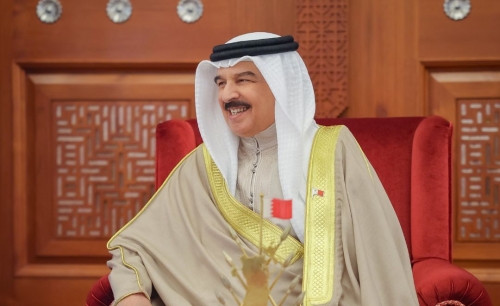
Parliament has finalised its draft reply to His Majesty King Hamad’s Royal Address, giving full support to his programme on economic diversification, job creation, national identity, youth and women’s advancement, foreign policy and security during the fourth ordinary annual session of the sixth legislative term.
In the text, prepared after the Royal Address at the opening of the National Assembly on 12 October 2025, MPs say the speech shows the King’s satisfaction with cooperation between the legislative and executive branches and his wish for Parliament to look further ahead, deepen belonging and strengthen unity. They say this message increases their responsibility to deal seriously with daily concerns and living conditions faced by citizens.
The reply records the Council’s pride in the bicameral system, in the separation of powers and in the restoration of political rights to women. It thanks His Majesty for his praise of parliamentary performance, tying that to a long-running process of state-building, the construction of a modern system of government and rules of sound administration rooted in Bahrain’s history.
MPs give special mention to HRH Prince Salman bin Hamad Al Khalifa, the Crown Prince and Prime Minister, for strengthening coordination between state bodies and for launching a new initiative aimed at jobseekers. They say the scheme reflects HM the King’s view of the Bahraini citizen as the country’s real wealth, and pledge that the Council will back national plans to secure decent jobs, expand training and support efforts to attract investment that generates work for Bahrainis.
On the legislative side, the reply points to Law No. 41 of 2025, which amends Decree-Law No. 47 of 2002 on the regulation of the press, printing and publishing and has been ratified by the King. MPs present the change as part of a wider move to support national media while keeping a balance between freedom of expression and professional duty, especially in closing a legal gap around electronic media. The Council says it will support steps to improve the skills of journalists and media workers through training schemes and modern professional systems.
The draft text ties this in with a series of economic and technological laws designed to lift Bahrain’s standing at regional and international level. It links future growth to digital transformation, artificial intelligence and non-oil productive sectors, and says the Council is already examining draft legislation on AI governance, cyber security, digital change in government, the updating of data protection rules and other pillars of a knowledge-based economy. MPs say they will work on laws that help bring technology to Bahrain, support scientific research and encourage innovation in universities, research centres and industry.
To support that push, the reply floats the idea of a national fund for research and innovation to finance projects in artificial intelligence, advanced technologies and sustainable energy. It also calls for more future-facing academic specialisations in national and private universities, for such subjects to feature in the Ministry of Education’s scholarship plans, and for stronger national programmes to equip young people with digital, leadership and entrepreneurship skills so they can compete in local and regional labour markets.
The Council links economic reform with changes in the labour market and with support for small and medium-sized enterprises. The reply backs laws to encourage investment in areas such as renewable energy, green industry, space technology and a ‘creative’ economy based on talent and innovation, noting that these goals stem from sustainable development targets. It calls for better labour-market information systems, higher job quality, full use of existing government schemes and a more flexible legislative setting to ease investment procedures and sharpen the competitive standing of the national economy. MPs say this needs to be matched by stronger tools to follow and assess the work of government bodies, protect public funds, keep public debt under control and ensure fair access to services.
National identity and social cohesion form another strand of the draft. The reply welcomes the King’s call to link scientific and knowledge progress to Bahrain’s values and long-standing practices, and promises parliamentary support for steps that strengthen a shared Bahraini identity. MPs say they will use their legislative and oversight powers to tie the values of belonging and loyalty into policies, school curricula, cultural plans and awareness programmes. The text mentions the project of creating a centre to reinforce national identity and encourages local digital and cultural output that shows Bahraini heritage, while calling for school, university and community programmes that spread tolerance and reject extremism and hate speech.
On social policy, the Council stresses the need to update the social protection system so that it keeps pace with the needs of the Bahraini family and child, and supports measures to give young people and women more space in decision-making. It praises the work of His Highness Shaikh Nasser bin Hamad Al Khalifa, the King’s Representative for Humanitarian Work and Youth Affairs and Chairman of the Supreme Council for Youth and Sport, pointing to the successful launch of Bahrain’s satellite as a first result in the space-technology field. It also commends the role of Her Royal Highness Princess Sabeeka bint Ibrahim Al Khalifa, Wife of the King and Chairperson of the Supreme Council for Women, in driving efforts to advance Bahraini women and help them reach leading positions.
In foreign policy, MPs say the Royal Address carried a clear message of peace and coexistence that matches the Kingdom’s long-standing approach: a call for fair and comprehensive peace and for dialogue and tolerance in international relations. They describe Bahrain’s positions as a moral and political reference that supports its growing diplomatic role at regional and international levels, as a state that plays its part in world efforts to strengthen security and stability.
The Council reiterates support for the King’s firm stance on Arab causes, especially the Palestinian question. It recalls his call to stop the war in the Gaza Strip, ease the suffering of civilians and press all sides in the conflict to meet their duties towards peace. The reply repeats Bahrain’s long-held view in favour of a lasting settlement based on the Arab Peace Initiative and the two-state formula, ensuring the restoration of the lawful rights of the Palestinian people, their right to self-determination and the creation of an independent state with East Jerusalem as its capital, in line with international resolutions.
MPs say they back the King’s efforts to keep the Palestinian cause at the top of Bahrain’s priorities during its two-year term as a non-permanent member of the UN Security Council. They pledge that the Council, through active parliamentary diplomacy, will support the foreign policy course laid down by His Majesty and work to deepen cooperation that serves Bahrain’s message of peace and supports regional and international security.
Security and defence take a central place in the document. The reply welcomes the King’s instructions to strengthen the readiness and abilities of the military and security forces, describing the Bahrain Defence Force, the Interior Ministry and the National Guard as the Kingdom’s shield and fence. MPs say they will support laws to develop these institutions, ensure proper care for their personnel and complete a legal framework that backs security programmes and recognises the sacrifices of members of the security and military services. The text notes in particular the role of Field Marshal Shaikh Khalifa bin Ahmed Al Khalifa, Commander-in-Chief of the Bahrain Defence Force.
Environmental and heritage issues are also addressed. The Council backs national plans to protect the marine environment and develop this part of Bahrain’s heritage, seeking a balance between economic activity and protection of the sea. It supports work to regulate the natural-pearl trade through a national hallmark designed to reinforce Bahrain’s standing and competitive position as a source of genuine pearls.
The reply closes by echoing the King’s insistence that Bahrainis should have priority in services and entitlements. MPs promise that this guiding line will shape their legislative and oversight work, with the aim of improving quality of life for citizens. They stress that the relationship between the people and the leadership remains rooted in mutual loyalty and trust.
The draft was prepared by the Committee for the Reply to the Royal Address, made up of MPs Ahmed Al Salloom, Hassan Bukhamas, Khalid Buanaq, Abdulla Al Dhaen, Abdulwahid Qarata, Maryam Al Sayegh, Mamdouh Al Saleh, Najeeb Al Kuwari and Hesham Al Awadhi. The committee received the Royal Address from Speaker Ahmed bin Salman Al-Musallam under a letter dated 16 October 2025, with an eight-week deadline to study the text and produce the reply on behalf of the Council of Representatives.
Related Posts