

Bahrain Moves to Criminalize AI Misuse in Deepfake and Defamation Cases
TDT | Manama
Email: mail@newsofbahrain.com
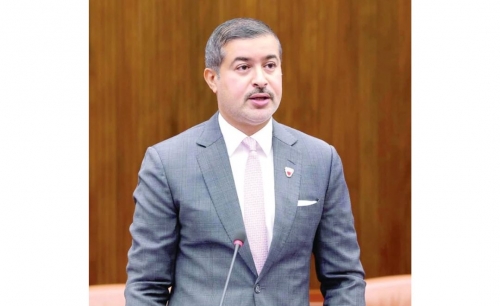
A group of members from Bahrain’s Shura Council has submitted a draft law aimed at criminalizing the misuse of artificial intelligence (AI) and modern digital tools in creating or falsifying visual or audio materials that defame individuals or harm family reputations.
Under the proposed law, offenders would face imprisonment and/or a fine ranging between BD3,000 and BD10,000.
The proposal was signed by Council members Ali Al Shuwakhi, First Deputy Chairman Jamal Fakhro, Dr. Mohammed Ali Hassan, Khalid Al Musallam, and Dalal Al Zayed.
The draft adds a new Article “10 (bis)” to Law No. (60) of 2014 on Cybercrime, targeting anyone who produces or falsifies visual or audio content with the intent to circulate, share, distribute, send, publish, or make it accessible through any technological means, if such actions expose others to contempt, punishment, or violate their honor, or family reputation, or serve an unlawful purpose.
According to the explanatory memorandum, the proposal comes amid the rapid development of AI technologies that allow users to generate hyper-realistic videos or voice files imitating specific individuals — a phenomenon known as “deepfake.” The lawmakers stressed that legislative intervention is necessary to protect privacy and social stability by penalizing the misuse of such technologies.
The memorandum further emphasized that while AI contributes positively to innovation across engineering, art, and education, the same tools can be exploited to fabricate false content or attribute statements to individuals without their consent, resulting in defamation, moral harm, or illegal objectives.
The proposed law complements existing provisions under Bahrain’s Cybercrime Law, which criminalizes acts such as data manipulation, financial fraud, and the production or distribution of explicit material. It also differentiates itself from the Penal Code’s existing provisions on misuse of communication means.
Once approved, the law would take effect the day following its publication in the Official Gazette.
Related Posts