

GCC Urges Firm Global Action
Secretary-General condemns Iranian attacks and Houthi threats to shipping
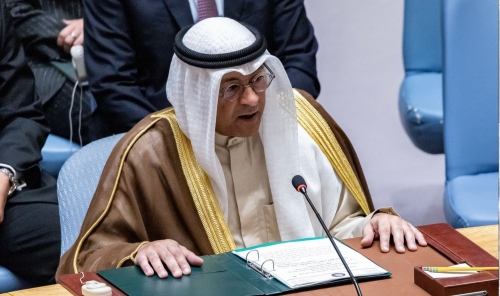
NEW YORK: Gulf Co-operation Council (GCC) Secretary-General Jasem Mohamed Albudaiwi has called for immediate international accountability over what he described as Iranian attacks on GCC states and Houthi threats to close the Bab al-Mandab Strait, warning that such actions endanger global energy security, international shipping and regional stability.
Speaking at the United Nations Security Council's high-level open debate on "Natural Resource Governance: A Driver of Peace, Security and Prosperity" in New York on Wednesday, Albudaiwi said the international community must adopt a firm stance to uphold international law, protect freedom of navigation and safeguard critical energy infrastructure.
Energy security at risk
Albudaiwi stressed that natural resources, when managed with good governance, transparency and international co-operation, promote sustainable development and prosperity. However, he warned that targeting energy infrastructure or disrupting supply routes transforms those resources into sources of conflict, threatening global economic stability and international peace.
He highlighted the GCC's role as a reliable global energy partner, noting that the bloc holds around 30 per cent of the world's oil reserves, nearly 20pc of global natural gas reserves, and contributes approximately one-quarter of global oil production.
The Secretary-General said GCC countries have invested resource revenues in economic diversification, renewable energy, low-emission hydrogen projects, infrastructure, innovation and human development while maintaining a balance between energy security and climate goals.
Calls for international accountability
Albudaiwi accused Iran of carrying out ballistic missile and drone attacks against GCC states and other countries since February 28, describing them as violations of international law, the UN Charter and the principles of good neighbourliness.
He urged the UN Security Council and the wider international community to fulfil their legal responsibilities by taking action to deter further attacks and preserve international peace, state sovereignty and territorial integrity.
He also said the Iranian government's actions not only threaten neighbouring countries but also harm the Iranian people by diverting national resources away from development and public welfare.
Houthi threats condemned
The GCC chief strongly condemned recent statements by the Houthi militia threatening to close the Bab al-Mandab Strait and making what he described as false accusations against Saudi Arabia.
He said such threats represent a serious escalation, violate international law and pose a direct threat to one of the world's most strategically important maritime routes, global trade and energy supplies.
Albudaiwi reaffirmed the GCC's full support for Saudi Arabia's measures to protect its sovereignty, national security and vital interests.
Navigation must remain free
The Secretary-General also criticised Iranian actions in the Strait of Hormuz, including attacks on commercial vessels, the planting of naval mines, attempts to impose compulsory shipping routes and repeated threats to close the waterway.
He said these actions have endangered international shipping, disrupted global supply chains and affected more than 20,000 seafarers of various nationalities.
Albudaiwi called for full support for the International Maritime Organization's efforts to ensure safe navigation and protect civilians.
Respect international law
Reaffirming the GCC's position, Albudaiwi said freedom of navigation through international waterways is guaranteed under the 1982 United Nations Convention on the Law of the Sea, which prohibits the suspension of transit passage through international straits.
He also referred to UN Security Council Resolution 2817, adopted on March 11 after being introduced by Bahrain on behalf of the GCC and Jordan, which condemned Iranian attacks on neighbouring states and declared that any attempt to obstruct navigation through the Strait of Hormuz constitutes a threat to international peace and security.
Concluding his address, Albudaiwi said the GCC remains committed to using its natural resources to promote sustainable development, maintain stability in global energy markets, provide humanitarian assistance to countries in need and serve as a reliable partner in safeguarding international energy supplies while promoting dialogue and the rule of law.
Related Posts