

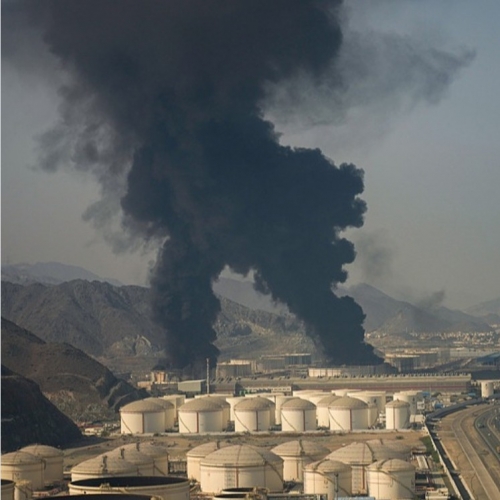
Middle East Energy Repair Bill May Hit $58bn as War Strains Global Supply Chains
email: online@newsofbahrain.com
Dubai:Repair and restoration costs for energy infrastructure damaged during the recent Middle East conflict could reach as much as $58 billion, according to new estimates by Rystad Energy, highlighting the scale of disruption facing both regional production and global supply chains.
The consultancy said rebuilding oil and gas facilities alone could cost between $30 billion and $50 billion, with an additional $3 billion to $8 billion required to restore power stations, desalination plants and heavy industrial assets such as aluminium smelters and steel facilities.
The revised estimate marks a sharp rise from earlier projections of around $25 billion, reflecting wider damage across critical infrastructure before the April 8 ceasefire between the United States and Iran reduced the intensity of attacks across parts of the Gulf.
Analysts warn that the financial toll goes beyond repair costs, pointing to mounting pressure on global engineering capacity and project timelines. “This is no longer just a story about damaged facilities in the Gulf. It is a stress test for the global energy supply chain,” said Karan Satwani, senior analyst at Rystad Energy.
Unlike previous crises, where financing was the main hurdle, experts say the biggest challenge now will be limited access to contractors, specialised equipment and fabrication capacity already tied up in a surge of global energy projects, particularly in liquefied natural gas (LNG) and offshore developments.
Recovery timelines vary widely. Facilities with limited surface damage have resumed operations within weeks, while those requiring replacement of core processing units may take years to restore. Additional pressures such as war-risk insurance, logistics bottlenecks and restricted supply chains could further drive costs higher.
At the country level, Iran accounts for the largest share of impacted infrastructure, with repair costs potentially reaching $19 billion. Damage has been concentrated in key gas processing hubs, including the South Pars gas field and facilities in Asaluyeh and Mahshahr.
Qatar faces more concentrated but technically complex damage, particularly at Ras Laffan Industrial City, a cornerstone of its LNG industry. Disruptions there intersect with ongoing expansion plans led by QatarEnergy.
Across the region, downstream refining and petrochemical facilities are expected to account for the largest share of repair spending due to their complexity and integration within supply chains.
Analysts say the reconstruction effort could ripple across global markets, as companies prioritise restoring existing production over launching new projects. This shift is expected to intensify competition for engineering, procurement and construction resources, potentially delaying major energy developments worldwide.
Producers with more resilient infrastructure, such as the United Arab Emirates, are seen as better positioned to maintain supply stability. The UAE’s Abu Dhabi Crude Oil Pipeline offers an alternative export route that reduces vulnerability during regional disruptions.
Related Posts