

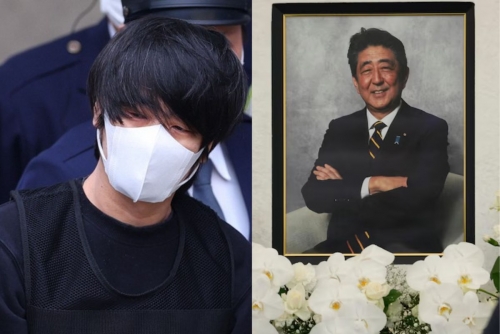
Japanese Court Sentences The Assassin of Former Prime Minister Shinzo Abe
Email: online@newsofbahrain.com
A Japanese court on Wednesday sentenced Tetsuya Yamagami to life imprisonment for the 2022 assassination of former Prime Minister Shinzo Abe, concluding a legal battle that fundamentally altered Japan’s political and social landscape. The Nara District Court handed down the verdict after Yamagami, 45, admitted to killing the country’s longest-serving leader with a homemade firearm during a campaign speech in Nara. Prosecutors successfully argued for the life sentence, characterising the assassination as an unprecedented act of violence in Japan's post-war history that struck at the very heart of the nation’s democratic process.
Throughout the trial, Yamagami’s defence sought a more lenient 20-year sentence, detailing the traumatic upbringing the defendant endured due to his mother’s involvement with the Unification Church. Yamagami testified that his actions were not motivated by Abe’s political ideologies but by a deep-seated grievance against the religious organisation, which he blamed for bankrupting his family through excessive donation demands. He targeted Abe after viewing a video message the former leader had sent to a church-affiliated group, believing the politician’s public support was a key factor in the organisation's continued influence in Japan.
The assassination triggered a massive wave of public scrutiny that exposed decades of institutional links between the ruling Liberal Democratic Party (LDP) and the Unification Church. Subsequent investigations revealed that more than half of the LDP’s lawmakers maintained connections with the sect, leading to a collapse in public trust and significant electoral losses for the party. In the wake of the scandal, the Japanese government moved to dissolve the church’s local branch, citing violations of regulations regarding "predatory" donation practices, while then-Prime Minister Fumio Kishida was forced to purge several cabinet members to mitigate the political fallout.
Abe’s death has left a complex legacy and a lingering sense of political instability in Japan. Known for his "Abenomics" economic policies and his efforts to expand Japan’s military role on the global stage, Abe remained a kingmaker even after stepping down from office. The current political climate remains volatile as the LDP, now led by Abe’s protégé Sanae Takaichi, attempts to navigate internal scandals and economic pressures. The life sentence for Yamagami marks the end of the judicial process, but the broader questions regarding political accountability and the regulation of religious organisations continue to resonate across the country.
Related Posts