

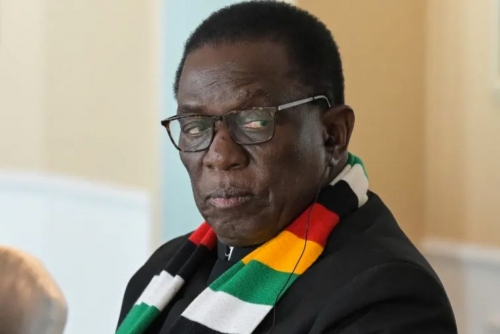
Zimbabwe Faces Outcry Over Bid to Extend Mnangagwa’s Rule Until 2030
TDT | Harare
Email : editor@newsofbahrain.com
Zimbabwe’s ruling party, Zanu-PF, has sparked a wave of outrage after formally backing a move to extend President Emmerson Mnangagwa’s stay in power beyond the current constitutional limit — a step critics say could push the country further toward authoritarian rule.
The party, which has governed Zimbabwe for 45 years, announced at its annual congress last week that it supported efforts to keep the 83-year-old leader in office until 2030. The decision, which would require amending the constitution, has ignited fierce public debate and drawn condemnation from opposition figures, legal experts, and civil rights groups.
Prominent constitutional lawyer Tendai Biti vowed to “defend the constitution against its capture,” while opposition leaders called a press conference set for Tuesday, branding the development a “constitutional crisis.”
Mnangagwa, who came to power in 2017 following a military-backed coup that ended Robert Mugabe’s 30-year rule, was elected president in 2018 and re-elected in 2023. Though his administration has overseen modest economic growth, it has been widely criticized for rampant corruption, political repression, and human rights abuses.
For many Zimbabweans, the move to extend his tenure evokes painful memories of Mugabe’s decades-long grip on power.
“As Zimbabweans, we must say ‘no’ to this,” said Moses Msipa, a former soldier from Bulawayo. “Mugabe became a dictator because he overstayed — now they want to take us back to that.”
The so-called “2030 Agenda” had circulated quietly within party ranks for months before its official endorsement on October 18. Attempts to protest against the plan in recent months have been met with a heavy-handed police response, leading to dozens of arrests.
Analysts warn that despite growing anger, organized resistance may be difficult.
“Only mass popular expression of dissent may change the course,” said Musa Kika, director of the Institute for Human Rights and Development in Africa. “But with weak grassroots mobilization and widespread fear, resistance remains unlikely — even as public frustration deepens.”
As the debate intensifies, Zimbabwe once again stands at a crossroads — torn between hopes for democratic renewal and the shadow of its authoritarian past.
Related Posts