

Beijing’s Advanced Submarines Challenge U.S. and Allies in Pacific
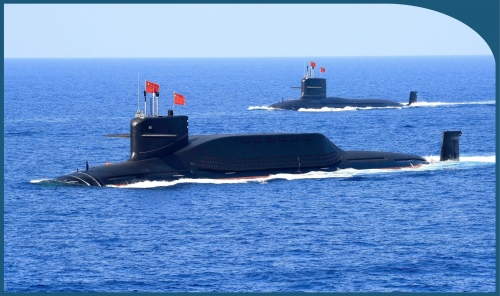
China is on the verge of becoming a world-class submarine power, driven by advanced technologies and a larger, more capable fleet that is outpacing the United States and its allies, fueling a new underwater arms race in the Pacific, according to the Wall Street Journal.
The American newspaper noted that China’s rapid developments have made its submarines quieter, faster, and equipped with more advanced weapons and sensors, while allowing them to remain submerged for longer periods.
At the same time, the Chinese military has expanded its reach deep into the Pacific, confronting rivals in the South China Sea and conducting military exercises simulating potential blockades or invasions around Taiwan. Such conflicts could require a greater role for submarines than at any time since World War II.
This expansion has prompted the United States—stationing nearly 60% of its submarines worldwide in the Indian and Pacific Oceans—and its allies to strengthen their underwater fleets.
Peter Jennings, former Australian Deputy Defense Minister and Director of the Strategic Analysis Foundation in Australia, told the newspaper, “Every country that aspires to have even a moderately capable naval fleet in the Indo-Pacific region is either building or purchasing submarines. There is no doubt they are highly valuable.”
Challenges in Keeping Up with China
The Wall Street Journal highlighted the significant challenges Washington and its allies face in keeping pace with China. The United States, in particular, struggles with producing new submarines.
Amid production concerns, the Trump administration revived aspects of the 2021 AUKUS defense agreement, which aims to help deter Chinese aggression. Under this agreement, Australia is expected to purchase nuclear-powered submarines from the United States and collaborate with Britain on building a new submarine incorporating American technology.
Until recently, China did not pose such a significant challenge. For years, Beijing focused on building diesel-electric submarines, which were sufficient for patrolling its “backyard” in the Western Pacific
Related Posts