

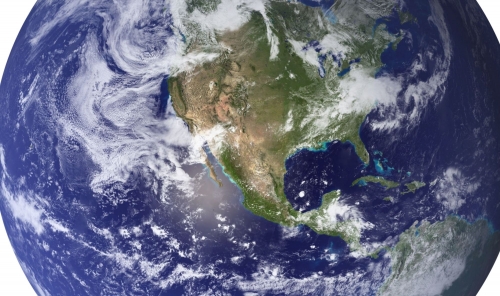
Earth Spinning Faster: July 22 Marks Another Record-Breaking Day
Did today feel like it flew by a little faster than usual? That’s because it actually did — by just over a millisecond.
Tuesday, July 22, has officially gone down as one of the shortest days on record this year, with Earth completing its rotation 1.34 milliseconds faster than the standard 24-hour day. This comes just days after July 10 set a similar record, and more such fast-spinning days are predicted in the weeks ahead, including August 5.
While the difference is too small to notice in daily life, it’s caught the attention of scientists, timekeepers, and tech experts around the world.
Earth’s rotation isn’t as consistent as we might think. Though a full rotation typically takes 86,400 seconds (or 24 hours), subtle changes — from the moon’s gravitational tug to shifting weather systems and movement in Earth’s liquid core — can make the planet spin slightly faster or slower. These changes usually amount to mere milliseconds.
So why does this matter?
Over time, even the tiniest shifts in Earth’s rotation can affect sensitive technologies such as GPS, communication networks, and satellites. That’s why scientists rely on atomic clocks — first introduced in 1955 — to keep time down to the microsecond. The global time standard, known as Coordinated Universal Time (UTC), is based on around 450 atomic clocks worldwide.
If this trend of shortening days continues, experts warn that we might eventually need to make adjustments to how we track time — possibly facing challenges similar to the Y2K issue that once threatened global systems.
For now, though, there’s no cause for alarm. Just a reminder that even time itself isn’t as fixed as it seems — and the Earth is always full of surprises, even when it’s spinning just a little bit faster.
Related Posts