


Forgeries in new avatar thrive on social media
If you have received Facebook notifications stating: ‘!! Warning Page !!Your page has been reported by others,’ Beware! you are being targeted by scammers trying to defraud you, according to a report by malwarebytes.org.
At first, you will receive a warning message:
“Warning!!!
Your page will be disabled.
Due to your page has been reported by other users.
Please re-confirm your page in order to avoid blocking.
You violate our terms of service. If you are the original owner of this account, please re-confirm your account in order to avoid blocking.
This message, written in bad English, should be a big deterrent preventing you from moving ahead.
But if you skipped that part, the following message should stop you:
To complete your pages account please confirm Http below:
https(dot)lnkd(dot)in/bNF9BUY?Facebook.Recovery.page
“Attention.” If you do not confirm, then our system will automatically block your account and you will not be able to use it again.
Thank you for the cooperation helping us improve our service.
The Facebook Team
Thankfully, in most cases, the browsers or associated programmes might have detected the scam and raised a concern and would have stopped you from the destination page, in case you haven’t realised it before that and had happily clicked on.
Main Photo: The Telegraph
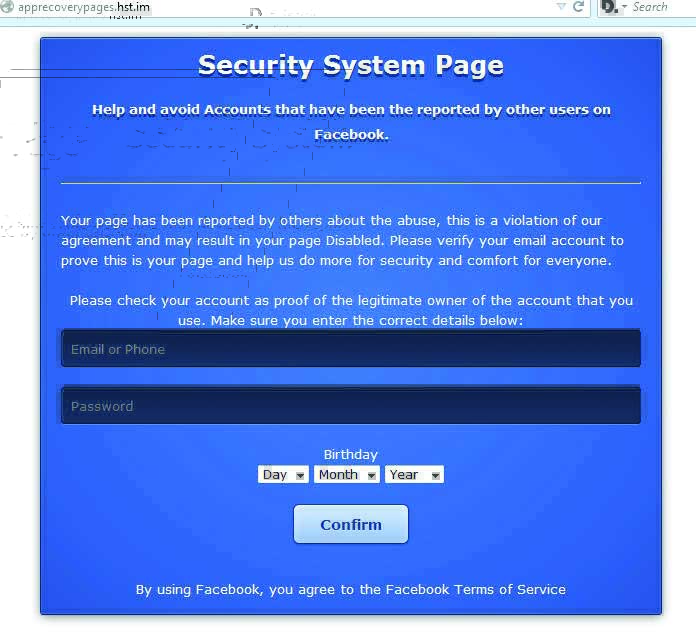
But, a few of you might have ignored the obvious traps and would have surged ahead to the next page, undetected even by the usual safety protocols followed by internet browsers.
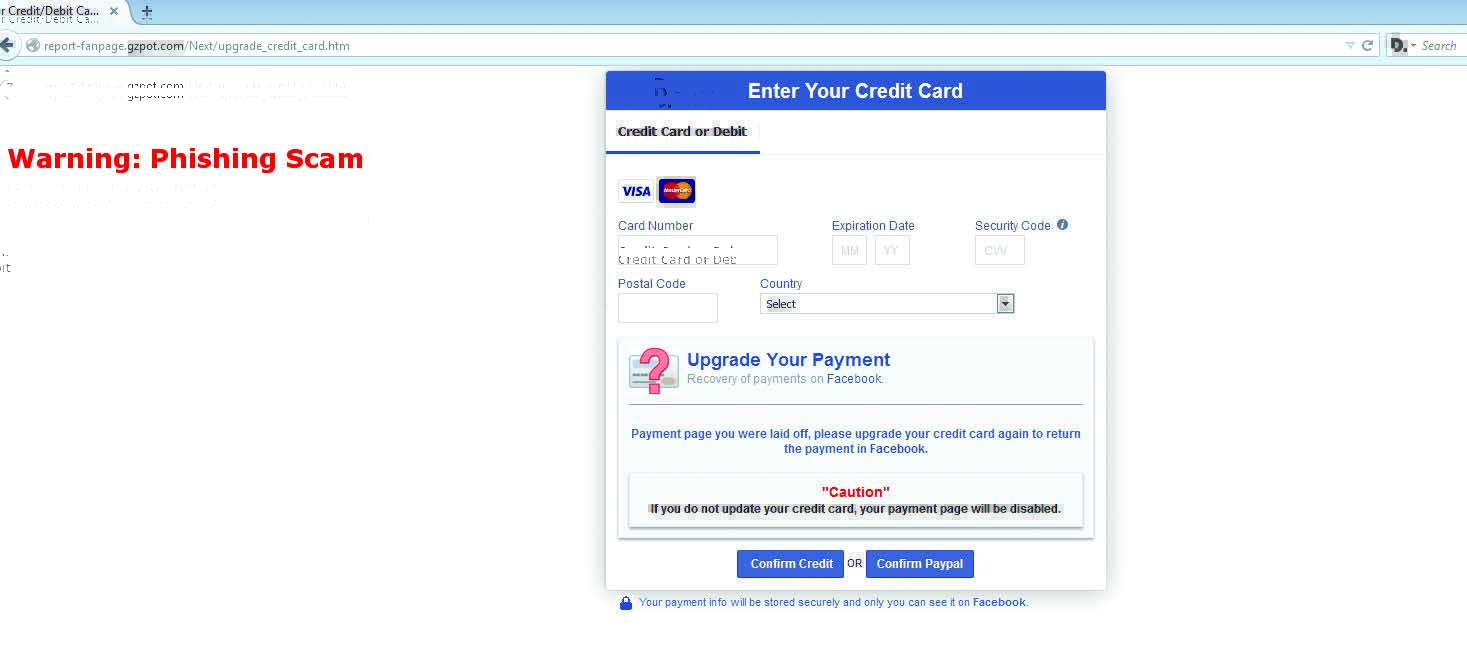
For those select few, you would have lost your FB login username and password to a scammer by now and you would be further pushed towards revealing your credit card information.
Once you fill the necessary information asked by the page, you have transferred all required data to the scammer for safely filling his wallet.
Many variants of this forgery are doing the rounds and most are nipped-at-the-bud. Yet, FB users have to be careful as more and more forgeries that mimics the real social-media accounts are on the rise.
Along with such forgeries done through social media, data theft from mobile phones have also raised concerns of experts.
A recent study conducted by Norton and Symantec found that around 38 per cent of smartphone users were victims of cyber-attacks in 2013 through scam applications, mobile ransomware, spyware, and intercepting mobile transactions.
“GCC smartphone users store large volumes of sensitive data on their mobile devices by accessing work files, mobile banking, mobile shopping, or saving personal photographs and messages. Cybercriminals are aware that smartphones often have limited security measures compared to other devices, making it crucial that strict security measures are implemented on smartphones,” said Nitin Sood, Managing Director of Wileyfox, MEA.
Related Posts