

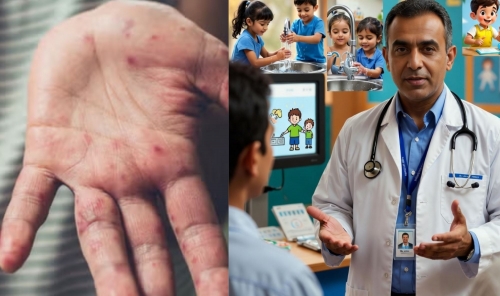
HFMD Cases Rise in Schools as Seasonal Infections Increase
“Schools have fully reopened, children are spending more time indoors because of dust storms and hot weather, and hygiene routines sometimes relax after the summer break. These are perfect conditions for the virus to circulate.”Cases traditionally begin rising in mid-August, peak in October - November, and taper off by December, exactly the pattern we are seeing now.
HFMD is highly contagious in the first week through blister fluid and hand contact. Dr. Zainab warns that infectiousness continues even after the visible rash disappears:
“Once the rash clears, children can still shed the virus for several weeks through the fecal route. This is why strict hand hygiene and surface sanitization are essential, especially since it’s unrealistic to keep children home for an entire month.”
Treatment is supportive - antipyretics for fever, topical creams for blisters, and plenty of fluids. Steroids, antibiotics, or antivirals like acyclovir are unnecessary. Severe cases may require hospitalization for symptom management.
Dr. Zainab also emphasizes that parents should keep children home if infected and avoid sending them to school or playgrounds. Adults with weakened immunity should also limit contact with infected children. After recovery, temporary nail shedding or minor temporary deformations may occur but resolve on their own.
Health experts urge families to watch for early signs - fever, mouth sores, and rashes and maintain hygiene measures to help curb the spread during the seasonal peak.
Related Posts