

MPs Focus on Hormuz Economic Impact
TDT | Manama
Email: mail@newsofbahrain.com
Higher shipping, insurance and supply costs caused by disruption in the Strait of Hormuz will be high on Parliament’s economic agenda when MPs return, with further aid possible for businesses hit hardest by the strain.
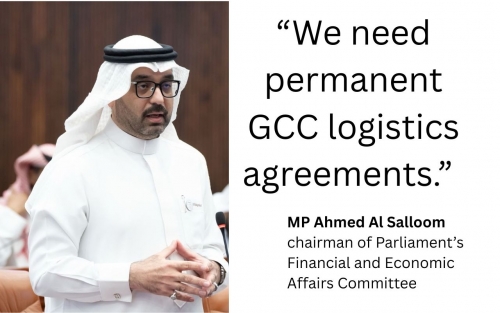
MP Ahmed Al Salloom, chairman of Parliament’s Financial and Economic Affairs Committee, said the scale and duration of the damage would determine the need for more support.
Any new help, he said, should be tied to real losses, keeping Bahrainis in work and allowing firms to keep trading.
‘If shipping, insurance and supply costs remain high, or some sectors are shown to have been hit harder, there will be a need for further targeted packages based on clear criteria,’ Mr Al Salloom said.
He said the committee had approved a proposal to put BD200 million into the market through banks to help affected sectors and ease pressure on company finances.
The aim, he said, was to give viable firms access to funding so they could meet running costs and retain Bahraini workers.
Government measures introduced during the crisis included paying the April 2026 wages of insured Bahrainis in private-sector companies through the Unemployment Insurance Fund.
Tamkeen also offered grants and finance through programmes aimed at small, medium and micro businesses hit by the disruption.
Mr Al Salloom said more than 7,000 Bahraini companies had benefited from Tamkeen support.
He said emergency aid should later give way to longer-term steps such as credit guarantees, debt rescheduling and wider sources of supply.
The proposed national fund for small and medium-sized enterprises would be part of that work.
Mr Al Salloom said the fund could offer cheaper finance, credit guarantees and working capital to firms that struggle to borrow from banks or do not have the guarantees lenders seek.
Supply routes will also come under close watch.
He said Bahrain’s road link with Saudi Arabia had proved crucial during the disruption, with some cargo sent through Red Sea ports before being moved overland through Saudi Arabia.
Urgent goods had also been flown in.
Mr Al Salloom called for permanent GCC deals for logistics emergencies, faster routes for food and medicines and a joint system to track stocks and shipments.
He also called for more import sources, greater storage space and minimum stock levels for basic goods.
The committee’s work in the fifth session will also cover public debt, government finances, living costs, private-sector wages, the proposed SME fund and changes to the Consumer Protection Law.
Related Posts