

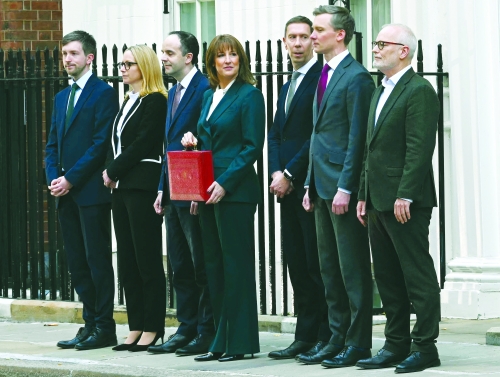
UK unveils tax-raising budget as growth downgraded
AFP | London
Email : editor@newsofbahrain.com
Britain's centre-left Labour government unveiled a tax-raising budget yesterday to curb debt and fund public services -- and said the country would grow less than expected over the coming years.
Ahead of the budget, Prime Minister Keir Starmer vowed to reduce National Health Service waiting times and ease a prolonged cost-of-living crisis, hoping to strengthen Labour's appeal as hard-right Reform UK gains momentum in the polls.
Finance minister Rachel Reeves, who raised taxes on businesses in her inaugural budget last year, returned on Wednesday with fresh hikes, this time hitting workers.
The budget measures will raise tens of billions of pounds, culminating in an extra £30 billion ($40 billion) from taxes in 2030-2031, official figures showed.
Driving the hike will be a freeze to income-tax thresholds, which drags more workers into higher tax brackets and breaks pledges made in Labour's budget last year, shortly after winning a general election.
'My choices'
"These are my choices, not austerity, not borrowing, not turning a blind eye to unfairness," Reeves, whose official title is chancellor of the exchequer, told parliament Wednesday.
"My choices are a budget for fair taxes, strong public services, and a stable economy," she said, as Britain faces a £20-billion gap in public finances.
Higher levies for online gambling, a tax on luxury properties, and a mileage-based charge on electric cars were unveiled, along with a cap on pension benefits. Most measures outlined in the budget, however, will not come into effect until 2028, near the end of the current parliament.
Reeves unveiled billions of pounds in spending measures including an end to the twochild benefit cap and above-inflation rises to the minimum wage and pensions.
Some sweeteners in her budget included freezes on rail fares and prescription charges, and cuts to energy bills.
Britain's economy is on target to beat growth forecasts this year, but its likely to slow more than previously expected between 2026 and 2029, the Office for Budget Responsibility (OBR) said in a report mistakenly released shortly ahead of Reeves's speech.
Britain already faces a deficit near five percent of gross domestic product (GDP), elevated inflation and climbing unemployment.
Related Posts