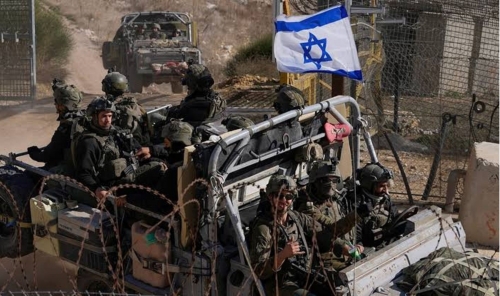
“We are monitoring the changes on the Syrian front. We will not allow hostile forces to establish themselves on our borders,” Zamir told troops, adding that the military would use its operational capabilities “precisely where and when needed.”
Zamir said Israel remained engaged on multiple fronts and could not lower its level of readiness.
“We are still in a multi-front war,” he said, warning that an escalation could develop on any front and stressing the need for constant preparedness.
Israeli forces have been stationed in a security zone in southern Syria since the fall of Bashar Al Assad's government in December 2024. The area was previously part of a UN-patrolled buffer zone separating Israeli and Syrian forces in the Golan Heights, established after the 1974 disengagement agreement.
The army chief's visit came a day after an Israeli strike targeted the Abu Duhur air base in Syria's Idlib province. Israel accused Damascus of violating an agreement by allowing Turkish troops to deploy at the facility.
“Israel repeatedly warned Syria that such a deployment would pose a threat to Israel's security. Syria chose to ignore these warnings,” the office of Israeli Prime Minister Benjamin Netanyahu said, without directly claiming responsibility for the strikes.
Turkey rejected the Israeli allegations, while US Ambassador to Turkey Tom Barrack described the strikes as an “unnecessary escalation.”
Syria's Foreign Ministry strongly condemned the Israeli airstrikes, describing them as an unjustified act of aggression and calling for action by the UN Security Council. It said Syria had been exercising restraint and working to strengthen stability and prevent further escalation.
Despite the tensions, Israel and Syria's new authorities have held several rounds of direct talks and agreed to establish an intelligence-sharing mechanism.
However, Israeli Defence Minister Israel Katz said last week that Israel planned to maintain its military presence in Syria.
Israel captured most of the Golan Heights from Syria during the 1967 Arab-Israeli War and later annexed the territory under its control. The annexation is not recognised by the international community, with the United States and Colombia among the countries that recognise Israel's claim.