

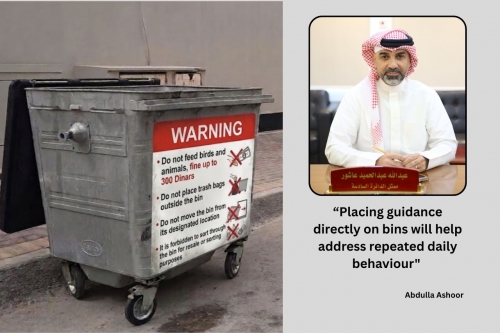
BD300 warning stickers on bins under study
Email: mail@newsofbahrain.com
Garbage bins across the Northern Governorate may soon feature warning stickers displaying cleanliness guidelines and BD300 fines, under a proposal currently being reviewed with the cleaning committee and a contracted sanitation company.
The initiative, submitted by Northern Municipal Council member Abdulla Abdulhameed Ashoor, seeks to reduce littering, prevent random waste disposal, and discourage practices that attract stray animals and rodents.
A ministerial response confirmed that the proposal is under technical and design review in coordination with the cleaning committee and service provider. The assessment will focus on sticker design, wording, guidance content, and language clarity.
The Northern Municipal Council had unanimously approved the proposal earlier, aiming to place clear instructions directly on waste bins to increase public awareness at the point of disposal.
Abdulla Abdulhameed Ashoor said the measure is intended to address repeated improper behaviour, including leaving garbage outside bins and relocating containers from their designated positions.
A sample sticker attached to the proposal includes warnings against feeding birds and animals, placing waste outside bins, and moving containers. It also highlights a BD300 fine for violations related to feeding animals and birds.
Officials said the goal is to make regulations more visible to residents, workers, and passers-by, rather than relying solely on general awareness campaigns.
The proposal also cites broader objectives, including improving neighbourhood cleanliness, reducing the spread of pests, and supporting municipal waste management operations.
Council members noted that improper bin usage negatively affects the appearance of residential areas and contributes to unhygienic conditions. They added that simple, direct instructions on bins could significantly improve compliance.
Related Posts