

Japanese Cloth Shortage Narrows Thobe Choices
TDT | Manama
Email: mail@newsofbahrain.com
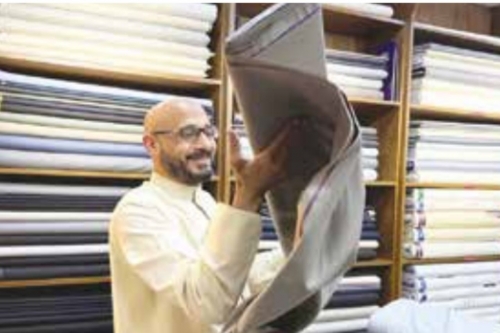
Japanese cloth used for tailored thobes has grown scarce in Bahrain and across the Gulf after fabric mills in Tokyo cut output by an estimated 70 pc, traders said. The drop has slowed exports to Gulf consumer markets amid regional disruptions, leaving agents and distributors in Kuwait, Saudi Arabia and the UAE with fewer supplies and reducing options for tailors and customers in Bahrain.
Sadiq Al Durazi, a trader in men’s fabrics, said wholesale shops and thobe tailors had begun importing Indonesian and Chinese cloth as substitutes for Japanese fabrics, which remain among the most sought-after in the Gulf. Indian linen has also been brought into the market as supplies of Japanese summer fabrics, including ‘Semiramis’, have thinned. Its price has doubled, both by the bolt and by the metre, he said.
Al Durazi said Bahraini importers, through contact with distributors in Kuwait, were looking at Gulf specifications for Indonesian fabrics so they would better suit hot weather and serve as a replacement for Japanese cloth.
He said Bahrain relies heavily on Japanese fabric brought in through Kuwaiti companies.
Some tailors have also turned to the UAE in search of cloth better suited to Bahrain’s summer, he added.
The average price of a thobe made from 3.5 metres of Indonesian or Japanese fabric, including tailoring, is BD22, while a linen thobe costs about BD17.
Prices are likely to rise in the coming days, he said, pointing to global shipping costs. Shipping a box holding 12 or 16 fabric bolts now costs around BD80.
Al Durazi said a black market in fabrics was unlikely, as traders were already seeking substitutes from several sources in Asia and Europe.
Yasser Shaaban, owner of a thobe tailoring company, said Bahrain was short of several wellknown Japanese fabrics, which had affected the range of choices available to customers.
He said most fabrics now found in shops were older stock imported before Ramadan.
Shaaban said customers seeking higher-grade cloth would find alternatives from England, Germany and Italy, though at higher prices. Fabrics imported from parts of Asia, he added, would help keep average prices within reach as a substitute for Japanese cloth.
Related Posts