

Strong Economic Shift: Bahrain's Non-Oil Growth Driving Economic Stability
The Gulf economy continues to demonstrate structural resilience and growing diversification even amid persistent regional tensions, underscoring its expanding role in supporting global economic stability and supply chains.
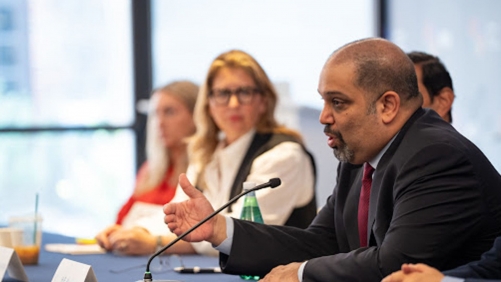
Speaking at a dialogue session at the Middle East Institute in Washington, Shaikh Salman bin Khalifa Al Khalifa, Bahrain’s Minister of Finance and National Economy, said that while geopolitical developments remain a concern, the Gulf region’s economic fundamentals remain strong and increasingly adaptive.
He warned that recent attacks on Gulf states and Jordan reflect broader attempts to destabilize the region, noting that such actions extend beyond security implications and risk disrupting global markets, particularly energy flows and key industrial commodities including aluminum, fertilizers, and iron.
Shaikh Salman highlighted Bahrain’s economic transformation as a central outcome of this resilience, pointing to the Kingdom’s continued progress in diversification. He noted that non-oil sectors now account for more than 86% of GDP, marking a significant structural shift toward a more sustainable economic model.
He further emphasized the strong recovery capacity of key sectors such as tourism and financial services, which continue to support Bahrain’s growth trajectory despite external pressures.
The Minister also pointed to proactive measures taken by the Central Bank of Bahrain to safeguard financial stability, including liquidity support of 7 billion Bahraini dinars, adjustments to reserve and liquidity requirements, and loan repayment deferrals for individuals and businesses—steps he said reflect a high level of institutional readiness to manage uncertainty.
Related Posts