


Our Eyes Under Pressure… The Cost of a Digital Life
As digital devices dominate daily routines across Bahrain—from classrooms and offices to entertainment—eye specialists report a noticeable rise in cases of eye fatigue linked to prolonged screen use, particularly among students and working professionals.
In an exclusive interview with The Daily Tribune, Dr. Walaa Ahmed Mounier, Ophthalmology Consultant at Dr. Haifaa Eye Hospital, said digital eye strain has become one of the most common complaints in recent years.
“Patients frequently report headaches, pain around the eyes, blurred vision, dryness, and difficulty focusing,” she said. “In some cases, especially among children, there is also excessive blinking and a constant feeling of eye fatigue.”
She explained that the condition is becoming increasingly widespread due to uninterrupted screen exposure and a lack of regular breaks, especially in academic and work environments.
However, Dr. Mounier clarified that screen use does not directly cause permanent vision loss.
“Screen use alone is not proven to directly cause vision loss. It is a multifactorial issue that includes genetics, environmental factors, and lifestyle habits. However, prolonged screen exposure is a significant contributing factor,” she noted.
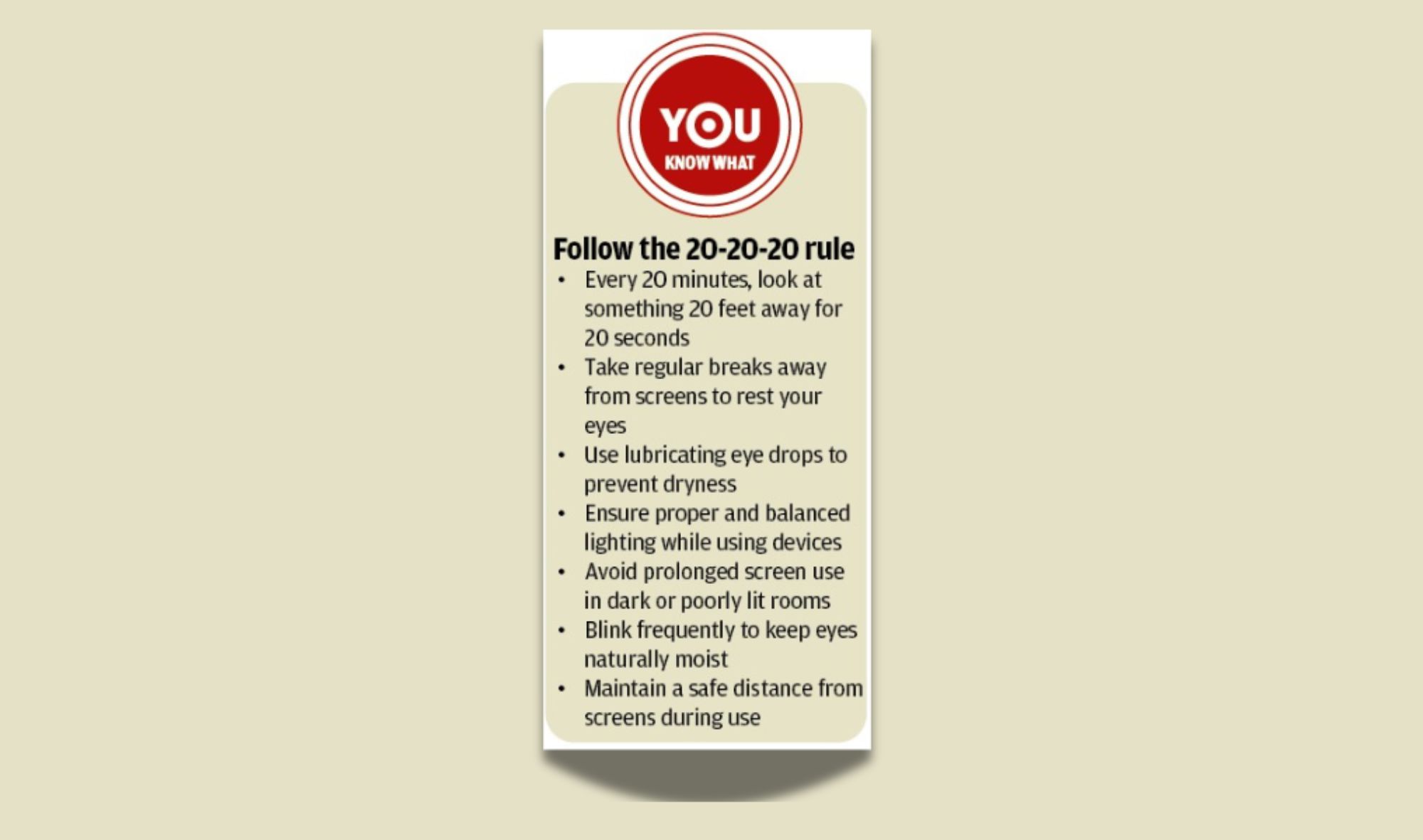
She also warned that working or studying in poorly lit environments can worsen symptoms and increase discomfort.
Experts say the issue is not only the duration of screen time but also how it is used—reduced blinking, continuous focus, and poor lighting all contribute to strain.
She explained that the condition is becoming increasingly widespread due to uninterrupted screen exposure and a lack of regular breaks, especially in academic and work environments.
However, Dr. Mounier clarified that screen use does not directly cause permanent vision loss.
“Screen use alone is not proven to directly cause vision loss. It is a multifactorial issue that includes genetics, environmental factors, and lifestyle habits. However, prolonged screen exposure is a significant contributing factor,” she noted.
She also warned that working or studying in poorly lit environments can worsen symptoms and increase discomfort.
Experts say the issue is not only the duration of screen time but also how it is used—reduced blinking, continuous focus, and poor lighting all contribute to strain.
Related Posts