

Understanding Ammonia Gas Exposure and Its Health Impact
Ammonia, a key industrial chemical used in fertilizing global agriculture and supporting Bahrain’s petrochemical sector, has come under renewed scrutiny following a recent industrial incident in Sitra. Widely produced from natural gas and air under high pressure, ammonia plays a vital role in global manufacturing but is also a hazardous substance requiring strict safety controls.
Following the incident, the Ministry of Interior confirmed that the situation was swiftly contained with no major impact reported, crediting the prompt response of government teams and relevant authorities. However, officials emphasized the importance of strictly following civil defense instructions during any chemical-related emergencies, particularly in industrial zones.
The Ministry urged the public to rely on official guidance available through the National Civil Protection Platform, stressing that awareness and compliance with safety procedures - especially those related to ammonia gas leaks - are essential to protecting lives. Environmental and health experts have also highlighted the risks associated with ammonia exposure.
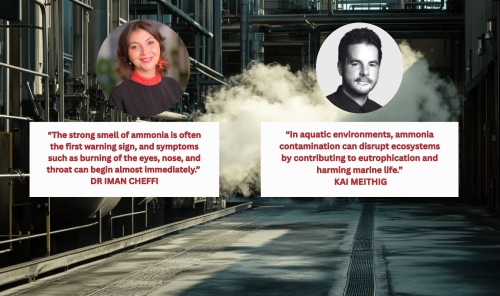
Kai Meithig, a sustainability advocate and environmental consultant, noted that ammonia is a strong irritant even at relatively low concentrations and can quickly affect human health upon exposure. “In the air, ammonia is a highly irritating gas and, in the environment, it is a reactive nitrogen pollutant that can contribute to broader air- and water-quality concerns,” Meithig said. He further warned that in industrial regions where ammonia is widely handled, accidental releases - though rare -can pose environmental and public health risks if safety controls fail. He also noted that aquatic contamination can lead to eutrophication, harming marine ecosystems and disrupting ecological balance.
Health guidance from the U.S. Centers for Disease Control and Prevention (CDC) states that high levels of ammonia can severely irritate and burn the skin, eyes, throat, and lungs.
Speaking to The Daily Tribune, Dr. Iman Cheffi, General Practitioner and founder of Esbitar, said the strong odor of ammonia is often the first warning sign of exposure, with symptoms such as burning of the eyes, nose, and throat appearing almost immediately. She warned that exposure to high concentrations in enclosed spaces can become life-threatening within minutes, potentially causing airway swelling or laryngeal edema and leading to severe respiratory complications. While mild exposure may resolve, severe cases can result in long-term airway damage or chronic lung conditions.

Authorities and medical experts continue to stress that rapid response, public awareness, and strict adherence to safety protocols remain essential to minimizing risks associated with industrial chemical incidents.
Related Posts