

Deadly Risks of Gas Leaks
Explosions and Fires on the Rise
For the same reason, such incidents keep recurring. Why? Because people do not realise the seriousness of gas leaks. Every year, countless lives are lost, many are injured, buildings collapse, and fires break out. Despite this, the issue is often ignored, even though it is extremely dangerous.
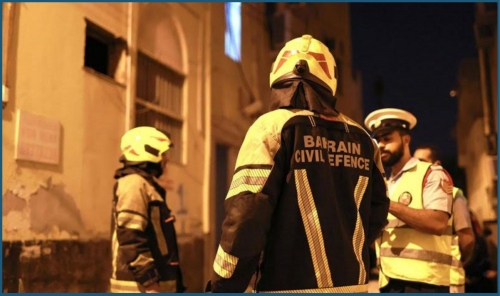
Some gas-related accidents in recent years highlight these serious risks. For example, in 2024, a gas cylinder exploded in a Muharraq apartment, causing minor injuries to the owner and three children. The following year, a similar incident in Arad, east of Muharraq, led to a building collapse, killing one person and injuring four others. These examples underscore the importance of public awareness and safety measures.
Speaking on the Interior Ministry’s Al Aman social media programme, Hidd Police Station Head Colonel Dr Osama Bahar explained the dangers of gas leaks, which caused more than 300 fires and 21 explosions in 2024 and 2025. He outlined the main causes of gas leaks and explained how to prevent them through four simple tips, which should be explained, taught, and practised by all household members to avoid similar incidents each year.
Firstly, Colonel Dr Osama Bahar warned that gas cylinders must be placed in an open, shaded area, away from any electrical switches or appliances, as even a small spark could trigger an explosion. Therefore, it is always advised not to touch any electrical equipment if gas is detected, as turning devices or lights on or off can generate invisible sparks strong enough to ignite accumulated gas. Even a small flame, such as from a lighter or match, can ignite leaking gas by providing enough heat to start combustion.
Colonel Dr Osama Bahar also highlighted the extreme importance of ventilation and exhaust fans, which help reduce the risk of gas accumulation, especially above the stove.
Regarding maintenance, he advised: “Do not hesitate to protect your home and your children by performing regular maintenance on the connections between the cylinder and the stove, which can be affected by heat and humidity.”
Related Posts