YouTube has introduced supervised kid accounts across the Middle East and North Africa (MENA), giving parents greater control over their children's viewing experience while allowing young users to safely explore the platform with enhanced protections.
The rollout covers Bahrain, Saudi Arabia, the United Arab Emirates, Oman, Kuwait, Qatar, Jordan, Lebanon, Egypt, Tunisia, Algeria and Iraq. The new accounts are designed for families whose children are ready to use the main YouTube app but still require parental supervision.
The supervised kid accounts provide access to YouTube with age-appropriate content settings, stronger privacy protections and a range of parental control features. Parents can choose from three content categories—Explore, Explore More, and Most of YouTube—allowing them to tailor the viewing experience based on their child's maturity level. The highest setting excludes videos rated for adults or considered unsuitable for supervised accounts.
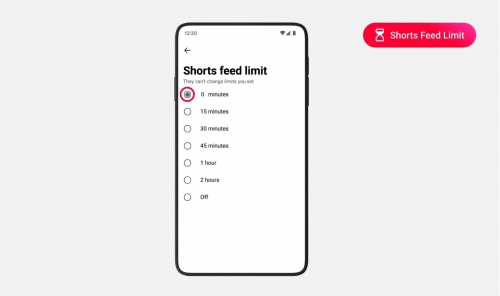
Among the key features is what YouTube describes as an industry-first Shorts feed timer, enabling parents to set daily limits on scrolling through YouTube Shorts or disable the feature entirely. Parents can also activate reminders encouraging children to take breaks or stop watching at bedtime, supporting healthier digital habits.
Several standard YouTube features are disabled by default for supervised kid accounts. Children cannot upload videos, leave comments, or receive personalised advertisements, while autoplay is turned off by default to encourage more mindful viewing.
The launch complements YouTube's existing supervised teen accounts, which are already available across the region. Teen accounts offer parents the option to link accounts, receive notifications when their teenager uploads content or starts a live stream, and access insights into channel activity to encourage informed conversations about online behaviour.
Javid Aslanov, Head of YouTube Middle East and North Africa, said YouTube has been an important part of family life in the region for more than two decades, serving as a platform for education, entertainment and shared experiences.
He noted that the company continues to invest in family-focused tools that prioritise children's wellbeing. Citing research by Kantar, Aslanov said 95% of viewers in Saudi Arabia and the UAE believe YouTube offers leading educational and learning content, while 92% of Gen Z viewers say the platform has helped them develop new skills.
Garth Graham, Head of Health at YouTube, said protecting young people within the digital world requires thoughtful safeguards that allow them to learn and explore while providing families with the tools needed to set appropriate boundaries.
The supervised kid and teen accounts build on YouTube's broader family safety initiatives, including the standalone YouTube Kids app, which offers a curated library of child-friendly content, and Google Family Link, which enables parents to manage screen time, filter content, monitor app usage and oversee their child's Android device settings.
YouTube said it will continue investing in technologies and safety measures aimed at protecting the privacy, wellbeing and online experiences of children and teenagers across its platform.