

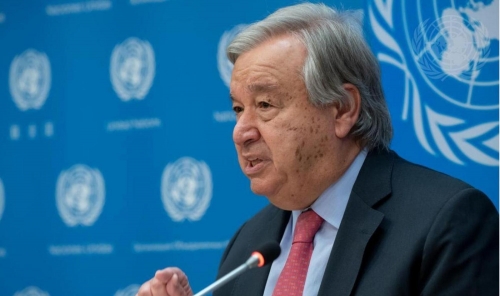
UN chief warns funding squeeze threatens global development gains
United Nations Secretary-General António Guterres has said sweeping reforms to the UN development system have made it “more coherent and accountable”, but warned that shrinking global development funding now threatens hard-won gains.
Speaking to the UN Economic and Social Council’s Operational Activities for Development segment, he reflected on nearly a decade of reforms aimed at strengthening how the UN supports countries in achieving the Sustainable Development Goals (SDGs).
When the overhaul began in 2017, he said the system was too fragmented, overly competitive internally, and not sufficiently equipped to respond to national needs.
Since then, he said the organisation has been reshaped to improve coordination, align more closely with national priorities, and strengthen leadership through a more empowered Resident Coordinator system.
According to the Secretary-General, cooperation frameworks have helped UN country teams work more effectively with governments, while accountability and transparency mechanisms have also been reinforced.
He said recent surveys suggest broad improvements in how governments view UN support, with the vast majority now rating it as effective. He also pointed to rising confidence in Resident Coordinators as key entry points for UN assistance.
Guterres highlighted reported improvements in delivery outcomes, including increased access to food assistance, education, and social protection programmes, as well as stronger national institutions.
He also noted efficiency gains of more than $900 million in 2025 through streamlined operations, shared services and supply chain improvements.
Despite this progress, he warned the global development landscape is becoming more difficult, with less than five years remaining to meet the 2030 deadline for the SDGs.
He pointed to slowing economic growth, rising debt, increasing vulnerability to shocks, and a sharp decline in development financing as major risks.
“This is a defining moment,” he said, arguing that decisions taken now will determine whether recent progress is sustained or reversed.
He set out four priority areas for further reform, starting with improved alignment between UN work and national and regional priorities. He acknowledged that fragmentation still limits the effectiveness of UN country teams.
He also proposed stronger integration of regional and country-level capabilities through new “regional platforms” designed to respond more quickly to crises and development needs without changing existing mandates.
The Secretary-General said the role of Resident Coordinators would continue to be recalibrated to ensure stronger leadership in areas such as climate action and complex development challenges.
He also said the UN is considering structural changes, including possible mergers between agencies such as UNDP and UNOPS, and UNFPA and UN Women, aimed at improving efficiency and impact while maintaining mandates and consulting member states.
Finally, he outlined the next phase of UN80 reform, focused on improving efficiency and results. Proposals include joint knowledge hubs, on-demand expertise systems, expanded shared services, and a system-wide data platform to improve access to information and tools.
He said the overall goal is to ensure that more resources are directed towards development outcomes at a time when global needs are rising but funding is tightening.
Related Posts