

Qatar Calls for Stronger Mediation in Global Conflict Resolution
TDT | Manama
Email: mail@newsofbahrain.com
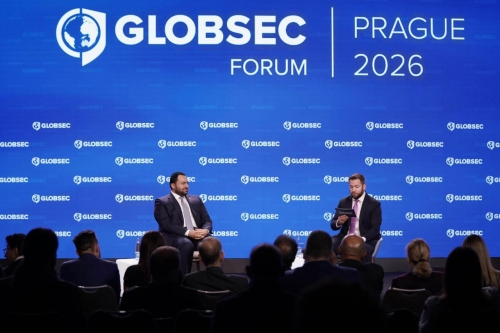
The Minister of State at the Ministry of Foreign Affairs of the State of Qatar, Dr. Mohammed bin Abdulaziz Al Khulaifi, took part in the “GLOBSEC Forum 2026” held in the Czech capital, Prague, where he emphasized Qatar’s long-standing commitment to mediation and peaceful conflict resolution.
Speaking during a main session titled “Pursuing Peace in the Middle East and Beyond,” Al Khulaifi warned that modern conflicts are no longer geographically contained, stressing that wars generate wide-ranging humanitarian, economic, political, security, and social consequences that extend far beyond their immediate regions.
He reaffirmed that mediation is a fundamental component of the foreign policy of the State of Qatar, rooted in its constitutional principles. He noted that Qatar has consistently engaged in dialogue and mediation efforts across multiple crises, including in Gaza, Afghanistan, Iran, Lebanon, Sudan, Chad, Venezuela, and Ukraine, among others.
Humanitarian and Global Impacts of Conflict
Outlining the consequences of ongoing wars, he said the first and most immediate impact is humanitarian collapse, including displacement, hunger, trauma, hostage situations, family separation, and destruction of civilian infrastructure.
He cited Gaza as an example, stressing that the humanitarian dimension is central rather than secondary, and called for parallel international efforts to ensure humanitarian access and civilian protection.
He also highlighted the risk of regional escalation, noting that conflicts rarely remain local and can quickly spread across wider regions such as the Gulf, Red Sea, and Levant.
A third concern, he said, is the erosion of trust in diplomacy itself, where prolonged wars may lead to skepticism about dialogue and mediation.
The fourth impact is global economic pressure, with conflicts affecting energy and food supplies, investment flows, aviation, maritime security, and migration patterns. He stressed that peacebuilding is therefore not only a moral responsibility but also a strategic necessity.
Related Posts