

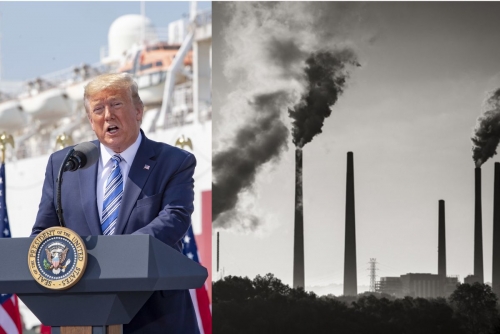
White House Strips Federal Authority to Regulate Greenhouse Emissions
Email: online@newsofbahrain.com
Washington: In a sweeping shift in U.S. environmental policy, President Donald Trump and his administration officially repealed the Environmental Protection Agency’s (EPA) 2009 “endangerment finding,” a scientific determination that greenhouse gases such as carbon dioxide and methane pose significant risks to human health and welfare. The endangerment finding had served as the legal and scientific cornerstone for federal climate regulations under the Clean Air Act for more than 15 years.
The Trump administration described the repeal as a major deregulatory victory, calling it “the single largest deregulatory action in American history.” EPA Administrator Lee Zeldin echoed this sentiment, arguing that the original finding was overly burdensome to industry and hindered economic freedom. The action also eliminates existing greenhouse gas emissions standards for motor vehicles one of the largest regulated sources of climate pollution.
Critics, including scientists, environmental groups, public health experts, and former government officials, strongly condemned the repeal. They argue that overturning a well-established scientific conclusion ignores overwhelming evidence that climate change and greenhouse gas pollution directly contribute to worsening health outcomes, extreme weather events, and rising economic costs. Many also characterise the move as a gift to fossil fuel interests at the expense of public safety and environmental protection.
Legal challenges are expected imminently. Environmental advocacy organizations and states such as California which have stricter climate measures have vowed to take the administration to court, asserting that the EPA has a clear statutory duty to protect public health under the Clean Air Act. Federal courts have previously upheld the endangerment finding and the EPA’s authority to regulate greenhouse gases, highlighting potential judicial hurdles for the repeal.
The repeal represents the latest in a series of actions by the Trump administration to roll back environmental protections, including withdrawing from international climate agreements and cutting incentives for clean energy transition. While supporters argue the changes boost economic activity and consumer choice, opponents warn they risk long-term damage to climate stability and public health.
As the debate intensifies, the future of U.S. climate policy now hinges not just on politics but on a likely protracted legal battle that could determine whether the government retains its authority to regulate greenhouse gas emissions a question with wide-reaching implications for global climate action.
Related Posts