

U.S. and Iran Begin High-Stakes Oman Talks Amid Rising Tensions
Email: online@newsofbahrain.com
Oman: Senior officials from the United States and Iran have convened in Muscat for a pivotal round of negotiations aimed at easing long-running tensions over Tehran’s nuclear programme, a diplomatic effort shadowed by heavy military posturing and growing fears of escalation.
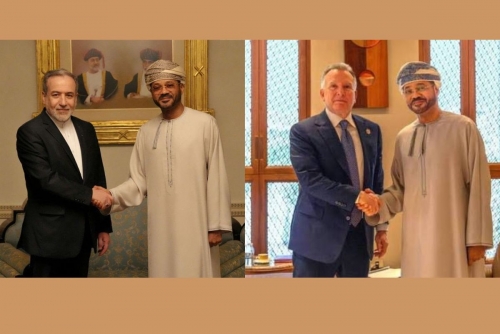
Negotiations between the United States and Iran have officially begun, with the talks being conducted in an indirect format, and Oman acting as mediator between the two sides. Oman’s Foreign Minister Badr bin Hamad Al Busaidi is currently holding meetings with U.S. Special Envoy Steve Witkoff, underlining Muscat’s central role in facilitating the dialogue.
In a further signal of the strategic sensitivity surrounding the talks, U.S. Central Command (CENTCOM) Commander General Brad Cooper has arrived in Muscat, according to officials familiar with the discussions.
Iran’s Foreign Minister Abbas Araghchi arrived in the Omani capital on Thursday to lead Tehran’s delegation in talks set for Friday, marking a renewed attempt to reopen diplomatic channels after months of stalled engagement and mounting friction.
The discussions come against a backdrop of deep mistrust and unresolved disagreements, with Washington pushing for broader terms that include scrutiny of Iran’s ballistic missile programme and regional activities, while Tehran insists the agenda should remain focused primarily on its nuclear activities.
U.S. officials, including Middle East envoy Steve Witkoff, are participating in the diplomatic track, with reports indicating that Jared Kushner and other senior advisers may also be involved as part of the wider U.S. delegation. The White House has linked the talks to a broader effort to curb Iran’s military posture and regional influence, even as it publicly stresses a preference for a diplomatic solution.
Tensions across the region have intensified in recent weeks following confrontations involving U.S. and Iranian military assets. The deployment of the U.S. aircraft carrier USS Abraham Lincoln to waters near Iran has been widely viewed as a strong deterrent signal and has heightened concerns that a breakdown in diplomacy could rapidly slide into open confrontation.
Inside Iran, growing uncertainty has prompted warnings from foreign governments. China has urged its citizens to leave Iran, reflecting rising concern among international communities over the security environment. The United States has also issued a fresh advisory calling on its nationals in Iran to depart, citing safety risks, potential travel disruptions, communications outages and the possibility of sudden detentions.
Oman has long served as a discreet diplomatic channel between Washington and Tehran, having hosted and facilitated several sensitive exchanges in the past. This week’s talks follow reports that earlier efforts to revive negotiations including proposals to broaden the agenda or move the venue to other regional locations nearly collapsed due to disputes over both the scope and format of the discussions.
Iranian officials have said they are seeking what they describe as a “fair, mutually acceptable and dignified” process, stressing that any outcome must respect Iran’s sovereignty and national interests. Tehran continues to firmly oppose the inclusion of missile restrictions in the negotiations, a position that remains one of the most significant obstacles to progress.
Related Posts