

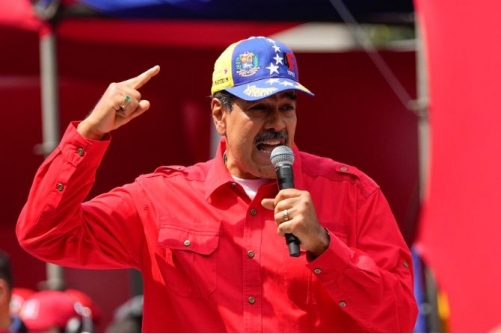
Maduro’s Legal Team Seeks Dismissal of U.S. Indictment Citing Blocked Defense Funds
TDT | Manama
Email : editor@newsofbahrain.com
An attorney representing the deposed Venezuelan leader Nicolás Maduro has formally requested a federal judge to dismiss the indictment against his client. The defense argues that the Trump administration is actively preventing the use of Venezuelan government funds required to pay for Maduro’s legal representation. Attorney Barry Pollack filed the motion in a New York City federal court, asserting that the government’s freeze on these assets denies Maduro his right to retain the counsel of his choice and undermines his ability to receive a fair trial. Pollack emphasized that as Venezuela’s head of state, Maduro has a legitimate right to expect his legal defense to be funded by the Venezuelan government.
The legal battle follows the capture of Maduro and his wife, Cilia Flores, in January, after which they were transported to the United States to face a range of criminal charges. The indictment includes conspiracy to import cocaine as well as the possession of machine guns and destructive devices. Furthermore, Maduro faces specific charges related to a narco-terrorism conspiracy. Both Maduro and Flores have entered pleas of not guilty to all counts brought against them.
Federal prosecutors allege that for several decades, Maduro and a network of co-conspirators collaborated with violent international drug traffickers and narco-terrorists. The government claims the group utilized corrupt regional officials to facilitate the distribution of massive quantities of cocaine into the United States. These allegations form the core of the criminal case that the defense is now seeking to halt.
In the request for dismissal, Pollack warned that he would be unable to continue representing Maduro if the Venezuelan funds remain inaccessible. He argued that the current situation would force the court to appoint counsel at the expense of United States taxpayers, despite Venezuela's stated willingness to cover the costs. Pollack concluded that any verdict reached under these financial constraints would be constitutionally suspect due to the interference with the defendant's right to an adequate defense.
Related Posts