

‘Act Now’: COP30 Protesters Demand End to Fossil Fuels
Scientists and global agencies warn that fossil fuels remain the biggest driver of climate change, with the International Energy Agency urging a rapid decline in coal, oil and gas production to keep global warming below 1.5°C. As pressure mounts for a managed phase-out, protesters brought that message directly to the COP30 summit in Belém, Brazil.
Why It Matters
Fossil fuels need to be phased out urgently because they are the primary force driving the climate crisis, worsening disasters, and harming communities worldwide. First, coal, oil and gas generate most of the world’s carbon emissions, pushing global temperatures toward the 1.5°C threshold and keeping energy systems locked into high-pollution pathways.
Second, their continued use is intensifying extreme weather. Rising emissions are amplifying heatwaves, floods, droughts and storms, displacing millions and causing escalating social and economic losses.
Third, the fossil fuel industry has deep impacts on health, rights and ecosystems. Billions of people live near extraction sites exposed to pollution, many in “sacrifice zones” where environmental harm is concentrated in low-income and Indigenous communities. Despite these risks, thousands of new projects are planned, expanding threats to land, water and human rights.
The Protest
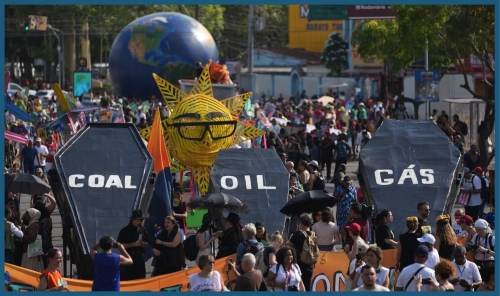
Thousands of demonstrators marched to the gates of the climate talks, carrying symbolic coffins labelled Oil, Coal and Gas and calling for an end to fossil fuel expansion. Indigenous groups, youth networks and activists from around the world joined the rally, chanting demands for land protection, climate justice and stronger global action.
This year marks the first time since 2021 that protests have been permitted outside a UN climate summit. Security remained tight after a small breach earlier in the week left two staff with minor injuries.
Inside the venue, negotiations have moved slowly, with nearly 200 countries working to advance commitments to reduce fossil fuel use and support climate adaptation. Brazil, hosting the summit to highlight the Amazon’s importance, faced scrutiny after approving new oil exploration at the river’s mouth days before the talks opened.
Campaigners also criticised the presence of an estimated 1,600 fossil fuel lobbyists, the highest yet recorded at a COP meeting. Meanwhile, ten nations signed a new Declaration on Information Integrity on Climate Change, aimed at countering climate misinformation.
Talks continue into next week as delegates seek to convert long-standing pledges into concrete action.
Related Posts