

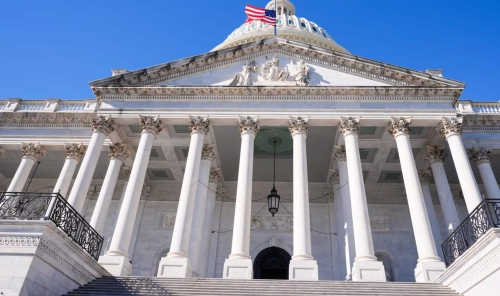
U.S. Senate Approves Deal to End Longest Government Shutdown in History
The U.S. Senate on Monday approved a bipartisan compromise to end the longest government shutdown in American history, bringing relief after weeks of political gridlock that left federal employees unpaid, disrupted food benefits for millions, and caused widespread air travel delays.
The measure passed with a 60-40 vote, backed by most Republicans and eight Democrats. While Democrats had pushed to link the deal with the renewal of federal health insurance subsidies—set to expire at year’s end—the final agreement only ensures a December vote on the issue without guaranteeing their continuation. These subsidies currently assist 24 million Americans.
The deal restores funding for government agencies whose budgets expired on October 1, halts plans to downsize the federal workforce, and prevents any layoffs until January 30. It also extends government funding through that date, maintaining the country’s spending trajectory, which adds roughly $1.8 trillion annually to its $38 trillion national debt.
The bill now moves to the House of Representatives, where Speaker Mike Johnson has expressed his intention to advance it swiftly—potentially by Wednesday—before sending it to President Donald Trump for final approval. Trump has described the agreement as “very good.”
The timing of the deal follows recent Democratic victories in major state and local elections, including New Jersey, Virginia, and New York City, where a democratic socialist was elected mayor. However, many Democrats have voiced frustration that the compromise fails to secure long-term health care protections.
“We wish we could do more,” said Senator Dick Durbin of Illinois, the Senate’s second-ranking Democrat. “The government shutdown seemed like a chance to push for better policy—it didn’t work.”
The agreement now sets the stage for another political battle in December, when lawmakers will once again debate the fate of crucial health subsidies—and the stability of government operations in the months ahead.
Related Posts