

Major European Airports Hit by Cyber Disruption, Causing Flight Delays and Cancellations
TDT | Manama
Email : editor@newsofbahrain.com
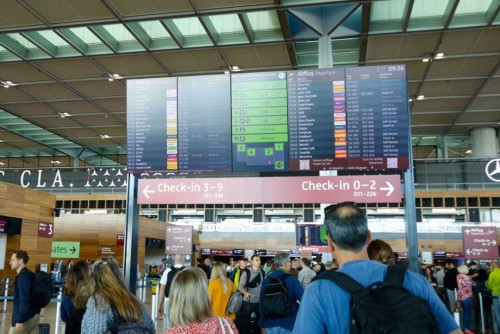
Several major European airports, including Brussels, Berlin, and London’s Heathrow, experienced significant cyber-related disruptions on Saturday, affecting automated check-in and baggage drop systems and leading to delays.
Airport service provider Collins Aerospace confirmed the issue, stating, “We have become aware of a cyber-related disruption to our MUSE software in select airports.” The company added that the impact was limited to electronic check-in and baggage systems and could be mitigated through manual operations.
Brussels Airport reported that at least 10 flights were cancelled and 17 more delayed by over an hour following a cyberattack overnight on Friday. By Saturday morning, the problem remained unresolved, causing a “large impact” on flight schedules. Eurocontrol, Europe’s aviation watchdog, advised airlines to cancel half of their flights to and from Brussels between 4:00 am GMT on Saturday and 2:00 am GMT on Sunday. Passengers at Brussels Airport were urged to check flight statuses with airlines before traveling.
London Heathrow, Europe’s busiest airport, also confirmed disruptions to its check-in and boarding systems, provided by Collins Aerospace, citing a “technical issue” that could cause delays for departing passengers. Meanwhile, Berlin Airport displayed a notice on its website warning of longer waiting times at check-in due to “a technical issue at a system provider operating across Europe.”
Collins Aerospace, a subsidiary of American aerospace and defense group RTX (formerly Raytheon), said it was “actively working to resolve the issue and restore full functionality to our customers as quickly as possible.” The company specializes in digital and data processing services for the aviation sector.
Cyberattacks and technical outages have increasingly disrupted airports worldwide in recent years, highlighting the vulnerabilities of highly interconnected digital systems that modern air travel relies on.
Related Posts