

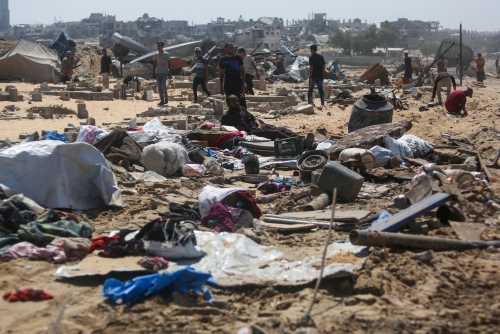
800 killed in Gaza since May 27 trying to get aid: United Nations
TDT | agencies
Email : editor@newsofbahrain.com
All they wanted was food. What followed was a tragedy.
Newly released UN figures have shed light on the scale of the crisis in Gaza, revealing a grim toll: nearly 800 people have died while trying to access humanitarian aid since late May.
Most of the deaths occurred near distribution points operated by the Gaza Humanitarian Foundation (GHF)—a privately run initiative backed by the US and Israel. GHF began operations on May 26, stepping in after Israel halted aid deliveries into Gaza for more than two months, prompting warnings of a looming famine.
Between the start of GHF’s operations and July 7, UN Human Rights Office spokesperson Ravina Shamdasani reported that 615 people were killed near GHF sites, while another 183 died, reportedly along the routes of aid convoys conducted by the UN and other humanitarian organisations.
"This is nearly 800 people who have been killed while trying to access aid," she said, adding that "most of the injuries are gunshot injuries".
GHF operations, which effectively sidelined a vast UN aid delivery network in Gaza, have been marred by chaotic scenes and near-daily reports of Israeli forces firing on people waiting to collect rations.
The GHF, which highlighted Thursday that it to date had distributed "more than 69 million meals", has denied that fatal shootings have occurred in the immediate vicinity of its aid points.
The UN and major aid groups have refused to cooperate with the foundation over concerns it was designed to cater to Israeli military objectives and violates basic humanitarian principles.
Gaza civil defence official Mohammed al-Mughayyir said that 10 people were shot by Israeli forces on Friday while waiting for supplies in the Al-Shakoush area northwest of Rafah, where there are regular reports of deadly fire on aid seekers.
Lessons learned
Responding to the UN’s figures, Israel’s military said it had worked to minimise “possible friction between the population and the IDF forces as much as possible”.
“Following incidents in which harm to civilians who arrived at distribution facilities was reported, thorough examinations were conducted... and instructions were issued to forces in the field following lessons learned,” it added.
Related Posts