

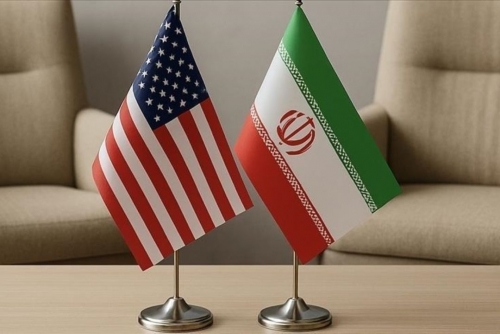
Iran Appeals to Trump’s Deal-Maker Persona in Bid for New Nuclear Agreement
TDT | Manama
Email: mail@newsofbahrain.com
Iran is working to repackage its ongoing nuclear negotiations with the United States as a strategic business opportunity that appeals directly to U.S. President Donald Trump’s self-styled image as a "dealmaker-in-chief." By positioning diplomacy over conflict, Iranian officials are making a pitch they hope will resonate with Trump’s economic priorities and anti-war stance.
At the heart of Iran’s messaging is the idea that avoiding war and instead striking a deal with Tehran could unlock substantial economic gains for the United States — a message clearly tailored to Trump’s “Make America Rich Again” rhetoric.
In a recent opinion article in The Washington Post, Iranian Deputy Foreign Minister Abbas Araghchi emphasized that Iran is open for global business, stating that “it is the US administrations and congressional impediments, not Iran,” that have kept American companies from accessing its vast market. He framed Iran’s economy — valued at $1.7 trillion in Purchasing Power Parity (PPP) terms — as an untapped opportunity that could benefit U.S. firms.
Analysts believe Tehran is strategically appealing to Trump’s transactional worldview. “They see that Trump wants to be a kind of dealmaker,” said Esfandyar Batmanghelidj, CEO of the Bourse & Bazaar Foundation. “They’re clearly understanding that Trump wants agreements that he can position as a win for the US economy.”
Negotiations between the two countries have already seen three rounds of mostly indirect talks, with Oman mediating. The most recent discussions included technical deliberations, and both sides have expressed cautious optimism about progress.
Trump has long criticized the 2015 Iran nuclear deal, brokered under the Obama administration, as deeply flawed and too lenient. After unilaterally withdrawing from the deal in 2018, the Trump administration reimposed sweeping sanctions on Iran, discouraging foreign businesses and locking American firms out almost entirely.
Iran now appears to be offering Trump a way to renegotiate on his own terms — a chance to frame a new agreement as both tougher and more profitable. Araghchi even hinted that Iran’s plans to build at least 19 additional nuclear reactors could mean “tens of billions of dollars in potential contracts,” potentially revitalizing the struggling U.S. nuclear sector.
Yet any U.S.-Iran economic partnership would face steep regulatory hurdles. American companies are still barred by "primary sanctions" from trading with Iran. Even if nuclear-related sanctions are lifted, “terrorism” sanctions, due to Iran’s designation as a state sponsor of terrorism and the IRGC’s dominance in its economy, would remain in place. Doing business in sectors tied to the IRGC — which includes banking, telecoms, construction, and oil — would still require case-by-case U.S. Treasury licenses.
Iran’s business landscape is further complicated by the IRGC’s increasing control over its economy, a consequence of decades of sanctions, war, and the country’s pivot toward a “resistance economy” — self-reliance over foreign dependence.
Experts warn that despite its size and potential, Iran remains a high-risk market. Corruption, unclear regulatory frameworks, and geopolitical instability deter even the most ambitious investors. Still, past ventures like Boeing’s $16 billion aircraft deal with Iran Air — later scrapped by Trump’s administration — highlight the scale of opportunity.
According to Bijan Khajehpour, managing partner at Eurasian Nexus Partners, sectors beyond oil — such as mining, digital technology, and consumer goods — offer growth potential. Iran's youthful and educated population of over 90 million is also an attractive draw for global companies.
Batmanghelidj suggested that American businesses could reenter the Iranian market through Gulf Arab states, which now show more support for a deal and serve as regional hubs for many U.S. firms.
However, the road forward hinges on one major factor: trust. The abrupt collapse of the 2015 deal has left both sides wary of long-term commitments.
“Despite all of the baggage we have over the 2015 nuclear deal falling apart, there are a lot more tools that could be used to find ways of structuring a win-win,” Batmanghelidj said. “If both sides are serious, there’s a deal to be made — and a market that’s ready.”
Related Posts