

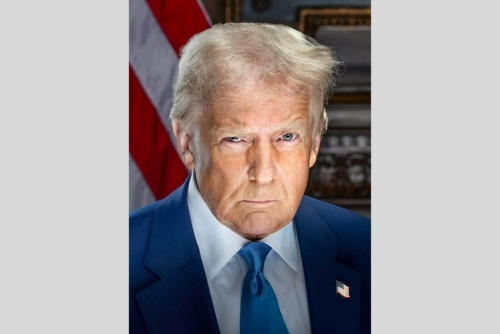
Trump Threatens 25% Tariffs on EU Goods, Sparking Trade Tensions
AFP | Gaza City
Email : editor@newsofbahrain.com
U.S. President Donald Trump has announced plans to impose a 25% tariff on goods imported from the European Union, claiming that the bloc was established to disadvantage the United States.
“We'll be announcing it very soon,” Trump told reporters during an appearance with his cabinet. “It'll be 25% generally speaking, and that will be on cars and all other things.”
The European Union responded swiftly, vowing to take firm and immediate action against what it called “unjustified tariffs.”
Trump's remarks fueled speculation about his broader trade agenda, particularly regarding existing tariffs on Mexico and Canada. While duties on imports from these countries are scheduled to take effect on March 4, Trump hinted at the possibility of postponement. However, a senior administration official later clarified that the deadline remains unchanged, with the president set to evaluate Mexico and Canada’s border security measures in the coming days.
The U.S. president reiterated his longstanding criticism of European trade policies, arguing that American exporters of food products and automobiles face unfair disadvantages.
“The European Union was formed to screw the United States—that’s the purpose of it, and they’ve done a good job of it,” Trump asserted. “But now I’m president.”
In response, an EU Commission spokesperson refuted Trump’s claims, emphasizing that the creation of the regional market had, in fact, facilitated business opportunities for American firms.
“It has been a boon for the United States,” the spokesperson stated. “We’re ready to partner if you play by the rules. But we will also protect our consumers and businesses at every turn. They expect no less from us.”
Tariffs function as taxes on imports, collected by the government and ultimately paid by companies importing the goods. Since taking office, Trump has utilized tariffs as a tool to bolster U.S. manufacturing, generate revenue, and pressure foreign governments into altering trade policies he deems unfair.
He has already imposed 10% tariffs on Chinese goods and explored additional duties on various imports. However, he has also suspended certain tariff plans, leading to uncertainty among businesses and trade analysts regarding his commitment to executing such measures.
“The 25% threat that he threw out today is in line with the high end of the range that he previously indicated,” said Tobin Marcus, head of U.S. policy and politics at Wolfe Research. “It’s a number that’s concerning—certainly should be concerning—for the trans-Atlantic trade relationship, but not totally out of the blue.”
The potential implementation of these tariffs could escalate tensions between the U.S. and the EU, with global economic implications at stake. Observers now await further details on the administration’s next steps in this evolving trade standoff.
Related Posts