

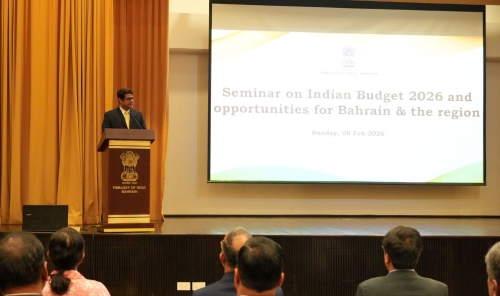
Embassy of India Hosts Union Budget 2026 Seminar in Bahrain
The Embassy of India in Bahrain organized a Union Budget Seminar on 08 February 2026 to discuss India’s Union Budget 2026 and its opportunities for Bahrain and the wider region.
The event featured distinguished speakers, including H.E. Mr. Abdul Nabi Al Shoala, Former Minister of Labour and Social Affairs; Mr. Madhu Ramankutty, Country Head, State Bank of India, Bahrain; and Mr. Ihab Dalwai, Senior Fund Manager at ICICI. Mr. Abdulrahman Juma, Chairman of Bahrain India Society, also attended.
The seminar provided a platform for in-depth discussions on key budget highlights, sectoral impacts, and investment opportunities, fostering engagement between investors, the business community, and policymakers.
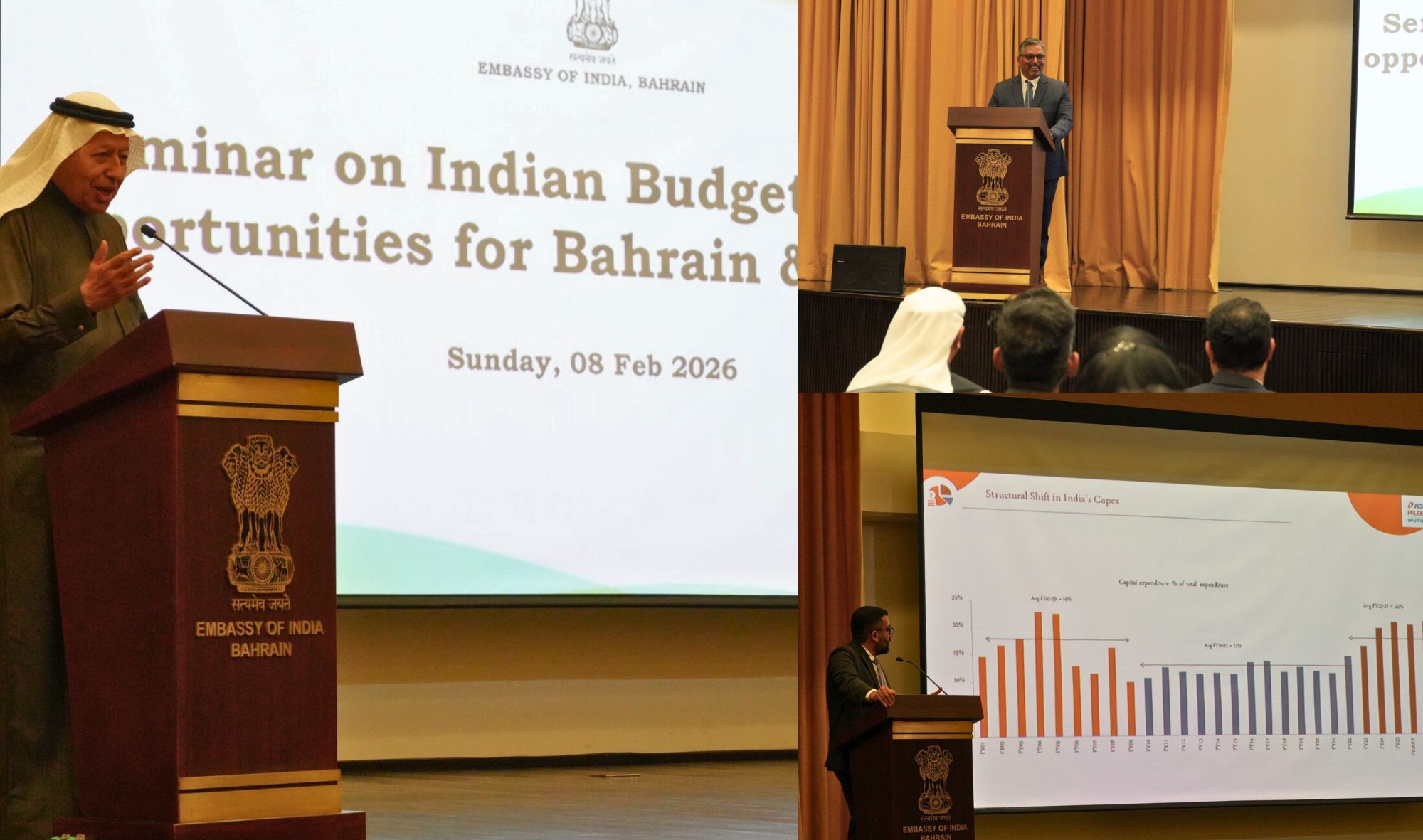
Addressing the seminar, H.E. Mr. Vinod K. Jacob, Ambassador of India to the Kingdom of Bahrain, spoke on the global significance of the Union Budget 2026, presented by Union Finance Minister Ms. Nirmala Sitharaman on 01 February 2026. He noted that the Budget had attracted considerable international attention, reflecting India’s position as a USD 4.13 trillion economy projected to grow at 7.4 per cent.
The Ambassador highlighted that the Budget was anchored in strong macroeconomic fundamentals and fiscal discipline, with a fiscal deficit estimated at 4.3 per cent of GDP and a debt-to-GDP ratio of 55.6 per cent.
He stated that the proposals reaffirmed the Government of India’s focus on economic reforms, ease of doing business, long-term growth, fiscal consolidation, and people-centric development, while positioning India as a trusted global investment destination. Referring to recent trade developments, he noted the conclusion of the historic India–EU Free Trade Agreement and the resumption of India–GCC FTA negotiations after more than 15 years, underscoring India’s commitment to deepening global economic and commercial engagement.
His Excellency Mr. Abdul Nabi Al Shoala recalled his association with India and recounted a pivotal moment in Bahrain’s early post-independence history to highlight India’s remarkable growth potential.
Reflecting on discussions within Bahrain’s first Cabinet following the nation’s declaration of independence on 15 August 1971, he noted that His Excellency Yusuf Al Sheera, then Minister of Development, and His Excellency Saeed Mahmoud Al Alawi, then Minister of Finance, emphasized that Bahrain’s economic focus should include engagement with India, given India’s vast prospects. He also referred to India’s ambitious vision to become a developed country by 2047, expressing confidence that India would successfully achieve its long-term developmental objectives as it approaches the centenary of its Independence.
Mr. Madhu Ramankutty, Country Head of State Bank of India, described the presentation of India’s Union Budget 2026 as a proud moment for the nation. He noted that Union Finance Minister Ms. Nirmala Sitharaman had presented her ninth consecutive budget, marking a significant milestone in India’s economic governance.
He observed that the Budget had evolved into an annual health report of the economy, focused on preparing India for long-term growth and the vision of Viksit Bharat 2047, with emphasis on steady growth, capacity building, and inclusive development under the principle of Sabka Saath, Sabka Vikas. He added that simplification of tax compliance sent a strong message of confidence and openness to global investors.
Mr. Ihab Dalwai, Senior Fund Manager at ICICI, delivered a presentation covering the Government’s current accounts, structural shifts in India’s capital expenditure, key budget announcements across various sectors, and the sectors likely to have the greatest impact. He also highlighted the overall focus and direction of the Budget.
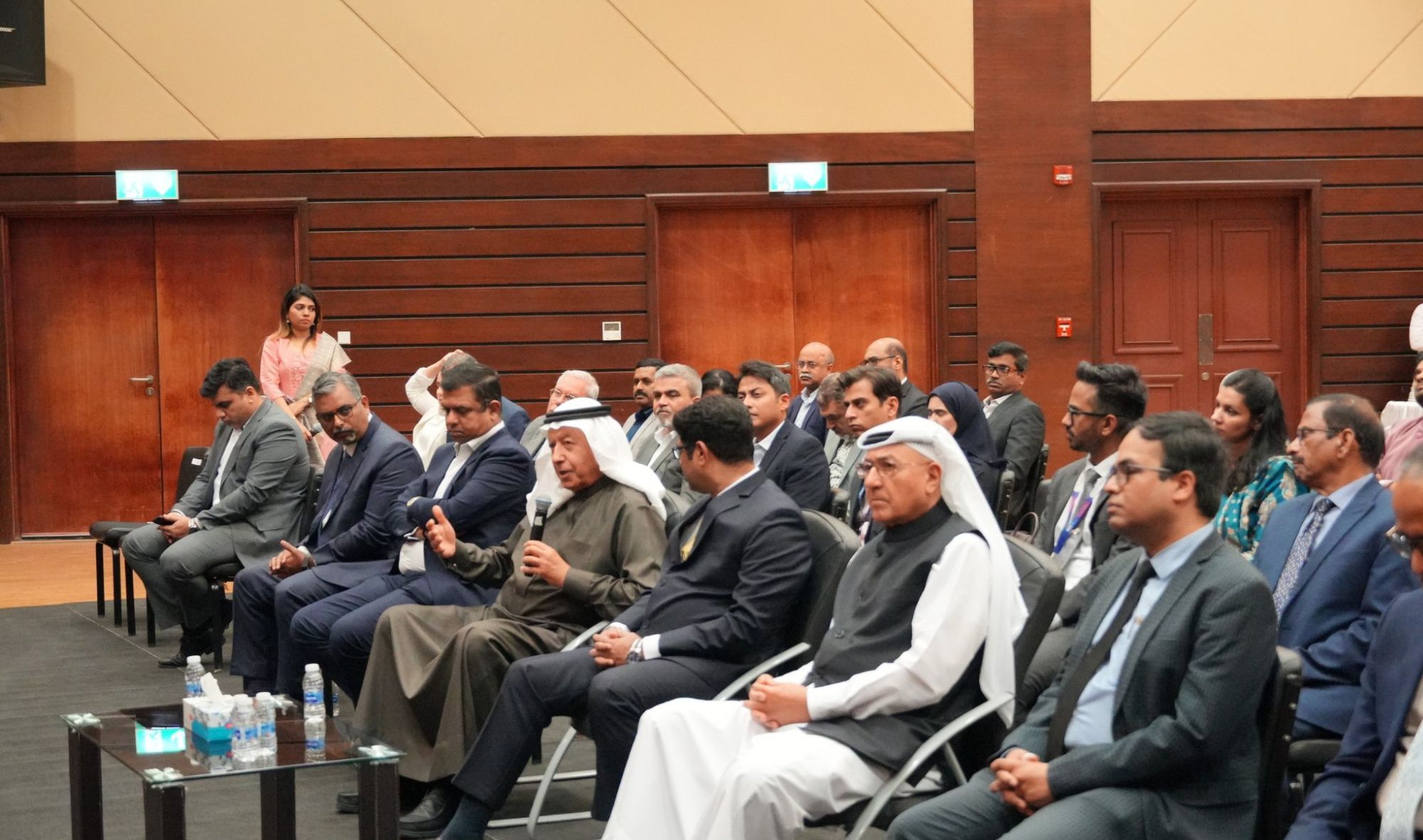
The session concluded with an engaging Q&A segment, providing investors and members of the Indian community an opportunity to raise questions, share perspectives, and gain clarity on the implications of the Union Budget 2026. Participants discussed sector-specific impacts, investment opportunities, and policy measures, making the session highly interactive and informative, and enabling a deeper understanding of the Budget’s potential effects on both domestic and regional markets.
Related Posts