

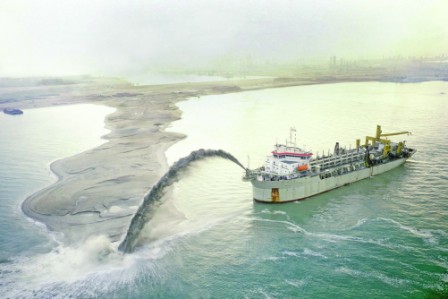
Bahrain dredging life out of marine world
Manama
The decision of the government to regulate dredging activities seems to be in the right direction to curb the already rising threat to marine life.
The unbridled dredging and reclamation activities for various developmental activities, including the housing, recreational and economic development, have caused major imbalance to the seabed and have also affected the vibrant marine life.
According to a study by Department of Biology, University of Bahrain, 110 km2, or 14 per cent of the Kingdom’s total land area was built out of reclamation activities. The study reports developmental activities have already altered 80 per cent of Bahraini coastlines.
It also seriously hampers fishing in Bahrain.
The concern has been raised numerous times earlier and a draft law was also prepared in this regard in 2013.
However, it failed to see light as it was rejected, as some lawmakers believed low-paid labourers would be made scapegoats and that the rich would escape punishment.
And so, the dredging companies continued to mine out huge chunks of sand from the seabed, unconcerned about its environmental impacts.
Bad time for marine beings
Dredging activities distort natural sea currents, based on which many marine creatures travel. A change confuses the creatures, as they lose their way and land on shallow waters or get stuck somewhere near the coast.
This became evident after a dead dolphin was found near Amwaj islands in 2013, which in turn strengthened the arguments in favour of a law now being enforced.
The loss of mangroves in Tubli Bay has also been due to increased mining activities, according to various studies.
However, the topic of regulation of dredging has once again come up in the cabinet discussion, which is a positive sign for environment activists across the globe.
Preparation of a draft regulation, keeping in the mind the previously highlighted problems, would be a welcome one. Better late than never.
Related Posts