

A world of 8.3 billion, a changing population story
TDT | Manama
Email: mail@newsofbahrain.com
Global population growth slows as falling birth rates, migration and ageing societies reshape the demographic landscape, including Bahrain
As the world marks World Population Day on July 11, attention is turning to changing demographic trends that are reshaping economies and societies worldwide. While the global population is estimated at around 8.3 billion in 2026, population growth is slowing as birth rates decline and people live longer.
According to the United Nations' World Population Prospects 2024 report, the world's population is projected to reach about 9.7 billion by 2050 before peaking at around 10.3 billion in the mid-2080s. The report notes that global population growth has fallen to its lowest level in decades, driven largely by declining fertility rates and increasing life expectancy.
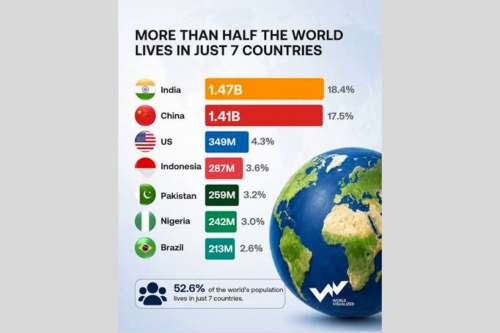
The report identifies India as the world's most populous country with approximately 1.46 billion people, followed by China with around 1.41 billion. At the other end of the spectrum, Vatican City is widely recognised as the world's least populous sovereign state, with a population of about 800.
Globally, fertility has fallen to around 2.2 children per woman, compared with about five children per woman in the 1950s, while more than half of all countries and territories now have fertility rates below the replacement level of 2.1 children per woman. Nearly 58 per cent of the world's population lives in urban areas, and average life expectancy has risen to about 73 years, contributing to an ageing global population.
Bahrain
Bahrain reflects many of these global demographic shifts.
According to World Bank data, Bahrain's crude birth rate declined from about 15.4 births per 1,000 people in 2015 to around 12 births per 1,000 people in 2024, representing a drop of more than 20 per cent over the past decade.
Information & eGovernment Authority (iGA) reports show that Bahrain's population stood at 1,603,260 in June 2025. Non-Bahrainis accounted for about 53.5 per cent of the total population, highlighting the significant role migration plays in the Kingdom's demographic profile.
The decline in birth rates mirrors trends seen across many countries, driven by later marriages, smaller family sizes, greater participation of women in higher education and the workforce, and rising living costs. While fewer children are being born, Bahrain's population continues to be shaped by expatriate migration and economic activity, making demographic planning increasingly important for healthcare, education, housing and the labour market.
Observed annually since 1990, World Population Day seeks to raise awareness of population issues and the importance of ensuring that people can make informed choices about their reproductive health and future. For Bahrain, the occasion also underscores the importance of long-term planning to support sustainable development and the goals of Bahrain Economic Vision 2030, ensuring the Kingdom is prepared for changing demographic realities while continuing to invest in future generations.
sdfsf
Related Posts