

Draft Labour Law Would Require Seats for Women Workers
TDT | Manama
Email : editor@newsofbahrain.com
Seats for female staff in all workplaces would be required under a draft law MPs will debate on Tuesday, after the Services Committee backed an amendment to Article 36 of the Labour Law in the Private Sector.
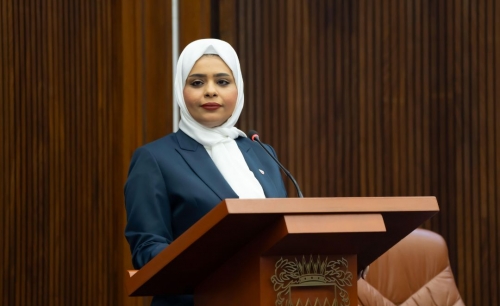
Parliament is due to examine a proposal, submitted by MP Hanan Fardan and revised in agreement with the Services Committee, to add a second paragraph to Article 36 of Law No 36 of 2012. The new clause would oblige employers who hire women to provide them with seats ‘in all places where they work, to ensure they can rest’, alongside the current duty to display the regulations on women’s employment clearly at the workplace.
The draft law, apart from its preamble, contains two articles. The first adds the new paragraph to Article 36; the second is an enforcement clause instructing the Prime Minister and ministers, each within their field, to apply the law from the day after its publication in the Official Gazette. The committee, which reviewed the text and took written views from a number of bodies, has recommended that MPs approve the amended wording.
Fardan anchors her proposal in the Constitution and in day-to-day working conditions. She said: ‘Regular sitting during long working hours reduces physical fatigue, especially for women, improves workers’ performance and cuts absenteeism,’ arguing that the duty to provide seats should apply even in jobs that involve constant movement. She added that being able to sit ‘gives female workers a sense of comfort and safety, which improves their mental state and productivity and ultimately benefits employers’.
In her explanatory memorandum, Fardan cites paragraph (b) of Article 5 of the Constitution, which requires the state to balance a woman’s duties towards her family with her work in society and to ensure equality with men in political, social, cultural and economic life. She also refers to Article 92(a), which gives MPs the right to submit draft laws. The proposal is framed as a way to give effect to those clauses by dealing with the strain caused by long periods of standing, especially in roles that depend on constant movement.
The memorandum lists health grounds first. It points to problems such as varicose veins, back pain and joint pain linked to long hours on the feet, and says these affect both productivity and quality of life. It draws on medical studies indicating that chances to sit during long shifts reduce physical stress and long-term health risks.
Humanitarian and social reasons come next. The document says a working woman has a right to a level of comfort that fits her health and natural condition, particularly during pregnancy or sudden health problems, and that this fits with national aims to support women in the labour market.
Economic arguments are also raised. Better conditions are said to raise output, cut sick leave tied to physical complaints and encourage staff to stay in their posts, easing recruitment and retraining costs. The memorandum presents the proposal as an investment in people that, over time, helps employers meet their business targets.
The paper then links the move to international labour rules, including International Labour Convention No 89, which calls for decent and healthy workplaces and proper rest facilities for women. It ties the amendment to Bahrain’s goals on women’s economic participation, gender equality and a work environment that respects human dignity.
During its study, the Services Committee asked for written comments from the Labour Ministry, the Supreme Council for Women, the Bahrain Chamber of Commerce and Industry, the General Federation of Bahrain Trade Unions and the Bahrain Free Labour Unions Federation.
The Labour Ministry thanked MPs for their work on labour matters but said the current legal framework already gives wide protection to women workers and does not suffer from a gap that needs filling. It walked through the cluster of Labour Law articles on women’s employment, including the ban on discrimination, paid and unpaid maternity leave, protection against dismissal because of marriage or maternity, and breastfeeding and childcare breaks counted as working time without loss of pay. It argued that these rules already secure the comfort and welfare of female staff in a wider and more detailed way than the new wording would add.
The ministry also recalled that an earlier draft of the proposal had joined the seating requirement with a duty on employers to take steps to prevent violence and harassment at work. It pointed to Decree-Law No 59 of 2018, which added Article 192 bis to the Labour Law and introduced criminal penalties for breaches of the occupational safety chapter. Taken together with criminal provisions and Bahrain’s obligations under instruments such as the International Labour Organization’s Convention No 190 on violence and harassment in the world of work, the ministry said this already creates strong deterrence against abuse. On this basis, it concluded that the draft law does not address any shortfall in the statute book and that existing rules are enough to meet its aims, while stressing that these comments are initial and that the government’s final stance will appear in a formal opinion.
The Supreme Council for Women took a legal-technical view. It said the idea of providing seats for women as a form of rest is already covered by Article 166 and the articles that follow, which deal with occupational safety and a suitable working environment for all staff. In its reading, the detailed organisation of seating and other rest facilities is an administrative matter within the Labour Ministry’s powers and can be handled by ministerial decision rather than by changing the main law.
The Bahrain Chamber of Commerce and Industry advised against the amendment. It argued that current legislation already keeps a fair balance between workers’ and employers’ rights and protects women employees. It warned that new legal duties might be hard to apply in some sectors where the nature of the work does not call for such changes. The Chamber said preventive measures are already provided for under existing laws and workplace rules, so long as in-house rules do not clash with national legislation. It cautioned that extra statutory duties might place unnecessary burdens on companies and disturb the wider economic legal framework, while at the same time noting the aims of the proposal and stressing its own adherence to national laws and international agreements on women’s rights at work.
Both trade union groupings took the opposite line. The General Federation of Bahrain Trade Unions backed the draft law and welcomed what it sees as extra protection for workers, especially women, in the workplace. It pointed to expected gains for women’s health and safety and called for labour rules on women’s employment to be linked to a ministerial order issued after talks with the relevant parties.
The Bahrain Free Labour Unions Federation also supported the move. It said compulsory seating would improve working conditions and ease physical strain, particularly in jobs that require long periods of standing. It pointed to likely cuts in injuries such as muscle strain, spinal problems and circulation issues and described the move as a preventive step that fits with international standards aimed at easing physical stress at work. In its view, providing chairs, especially for women, helps build a more comfortable and fair workplace and signals an employer’s wish to improve conditions.
In its final view, the Services Committee urged MPs to approve the draft in its amended form, saying the requirement to provide seats for female workers is in line with Bahrain’s constitutional principles on women’s rights, labour-rights standards and national efforts to support women’s presence in the labour market.
Related Posts